


The Great Junk Transfer


A 2026 study by Talker Research on behalf of 1-800-GOT-JUNK?
Right now, someone is opening her father’s closet for the first time since he passed.
Someone else is staring at a basement full of things his grandparents swear are valuable. Similar moments are playing out across millions of homes, but no one is talking about it.
The Great Wealth Transfer is one of the defining stories of our era. Every financial outlet is covering the money moving from baby boomers to their children over the coming decades. Nobody is covering the stuff. One household at a time, there are basements to clean out, boxes to open, and decisions to make. Multiply these individual moments by a generation, and what you have is the largest transfer of personal possessions in history.
The Great Junk Transfer.
This isn’t just a theoretical shift. Between 2021 and 2025, nearly a quarter of junk removal bookings in North America were directly tied to a loss, inheritance, or estate cleanout.¹ The Globe and Mail gave this phenomenon a name in 2022. Four years later, we went looking for the data.
To understand the human friction beneath these numbers, 1-800-GOT-JUNK? commissioned a study of 2,200 people across the United States, Canada, and Australia. The result is a generational disconnect: nearly half of heirs globally (49% in the US) would rather inherit nothing than deal with the stuff.
State of Junk 2026: The Great Junk Transfer Report
What is junk?
We often associate it with trash, but junk is subjective. Often, junk is a perfectly good piece of the past that you simply don’t have the physical or emotional room for anymore. It’s the lamp that made sense in a different house. The furniture that signaled something to one generation and says nothing to the next. When an object keeps its sentimental value but loses its place in your home—and your life—it gets stuck. And so do you.
That is when a perfectly good item becomes junk.
Nearly half of people globally would rather inherit nothing than deal with the stuff.
We pass down items with the best of intentions and hope that they bring comfort, but the data reveal a more complicated story. We asked 2,200 people in the US, Canada, and Australia what they think. Here’s what they had to say.
48% of respondents globally—and 49% in the United States—say they would prefer a clean slate over dealing with someone else’s belongings.
Source: State of Junk 2026 — The Great Junk Transfer Report, 1-800-GOT-JUNK? × Talker Research
Both sides are valid—some people find solace in objects that are left behind, while others feel overwhelmed. There’s no right or wrong way to feel.
.avif)
The stuff is piling up, and people feel it
How did we get so much stuff in the first place? Partly, it’s about how easy things have become to acquire: online orders, bulk warehouse runs, cheap clothes. But acquisition alone doesn’t explain it. An entire generation was shaped by scarcity, by the instinct to save things in case they were needed. The result, decades later, is homes filled with the physical evidence of a life fully lived. And children who feel a deep need to honor their parents’ legacy.
feel they’re running out of space in their home (Australia is feeling the squeeze the most at 55%)
feel frustrated by a lack of organized space, at least weekly (The US is the most frustrated at 52%)
intentionally declutter at least once a week (The US is highest at 43%; Australia is lowest at 18%)
More than junk: the stories we inherit
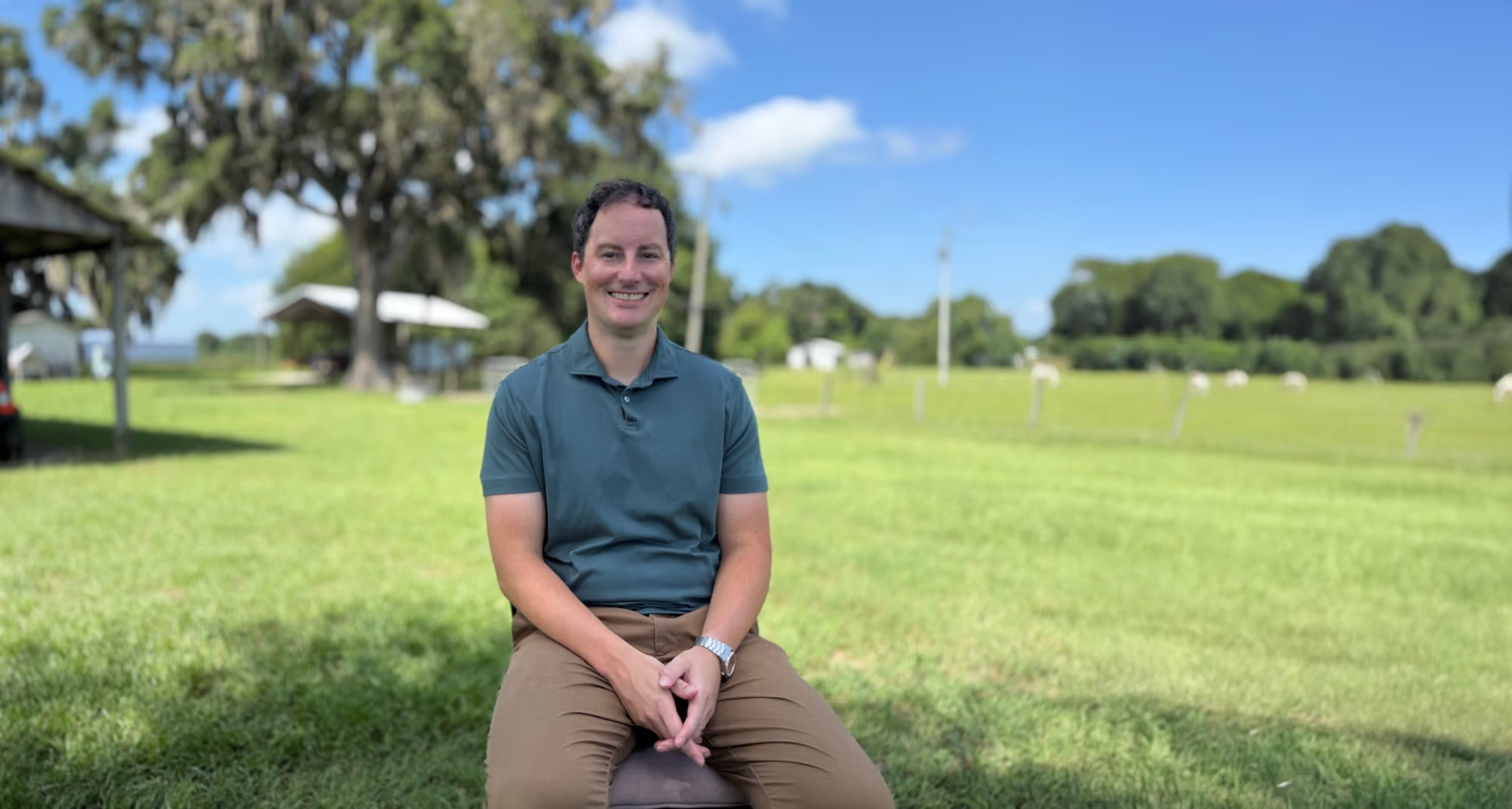
Nick Fox has seen it all. The radio announcer and content creator based in Florida started documenting the bizarre and baffling things his wife inherited, and the internet responded. Soon, his DMs were flooded with photos from around the world.
Clown collections. Forty years of National Geographic magazines. A basement full of dolls and Beanie Babies. What started as a celebration of weird finds quickly uncovered something deeper: we are weighed down by inherited items, and the world is looking for a way to let go.
It stopped being about the junk pretty quickly. People aren’t just sending me photos, they’re sending me their stories. And those stories are funny, overwhelming, heartbreaking, and everything in between.— Nick Fox
Sometimes what’s buried under the clutter is exactly what you were looking for
Sixty-nine percent of people have discovered something they completely forgot existed while cleaning out a home. The most meaningful ones aren’t always on display. They’re the ones at the bottom of a box, in the back of a drawer, in the pile you almost didn’t sort through.
Some of what people found:
- A hard drive containing over 12,000 family photos, thought to be lost forever
- Passports from when grandparents immigrated from Czechoslovakia
- A handwritten love letter from the 1940s, hidden inside a book
- A very old Game Boy and an original Nintendo from childhood
- A wallet with money in it, lost two years ago
The profound and the mundane, side by side in the same box. This is what a real cleanout looks like, and it’s exactly why slowing down matters. You don’t know which pile something belongs in until you pick it up.
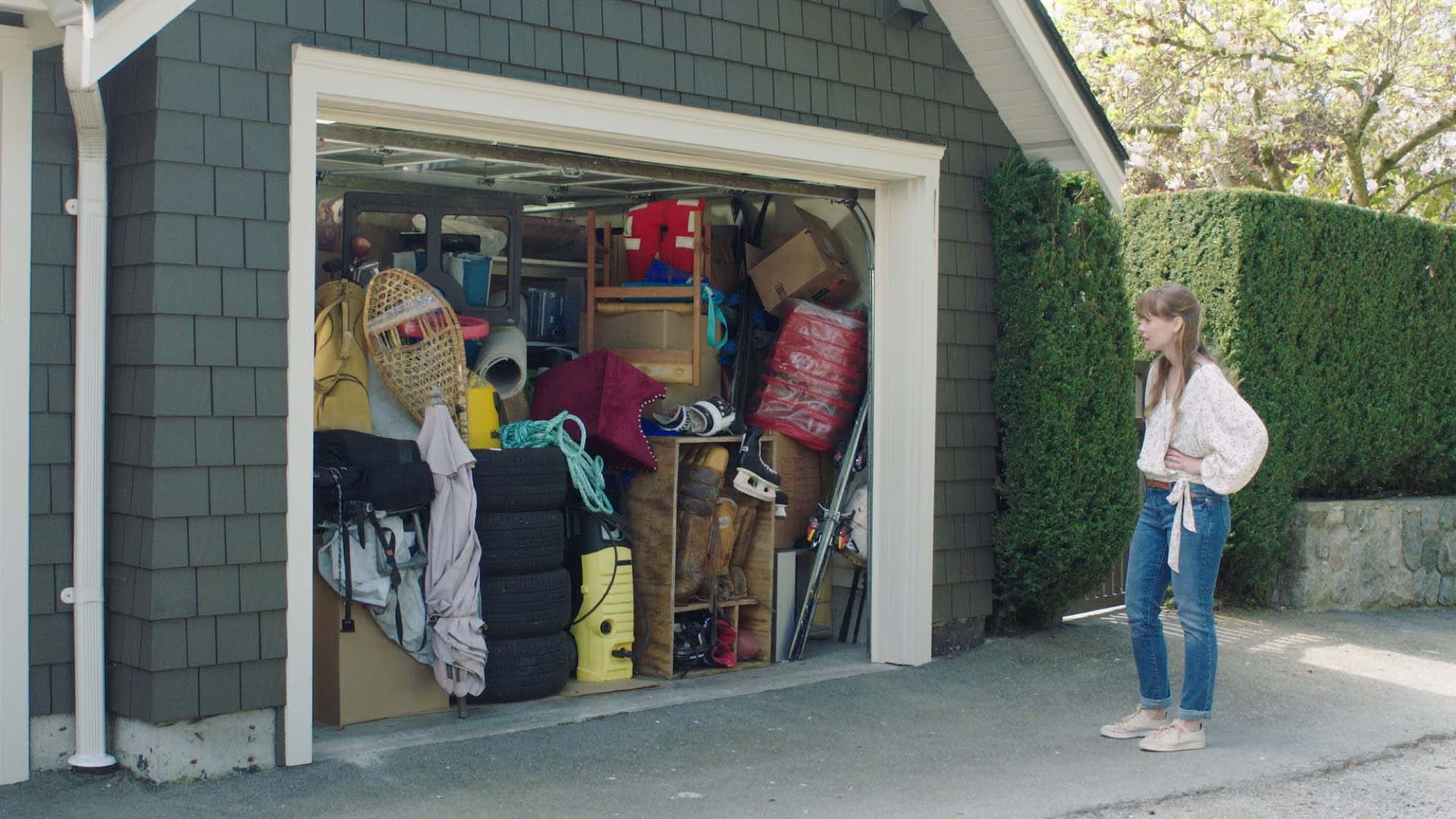
Quality over quantity
It’s not about how much; it’s about how much something means.
When we asked how many items people would prefer to inherit, the single most common answer was just 1 to 5 items.
prefer a few meaningful items over inheriting everything a relative owned.
say that “sentimental value” is the top reason they hold onto inherited items.
The top 5 things inherited globally
Source: State of Junk 2026 — The Great Junk Transfer Report
Why the transfer is breaking down
Dr. Blaise Aguirre, Assistant Professor of Psychiatry at Harvard Medical School, sees the inheritance gap as a cultural shift as much as a psychological one.
“The objects that once signaled status and care simply don’t carry the same language for the next generation,” says Dr. Aguirre. “What people actually remember is rarely the objects themselves. The human brain doesn’t file memories under things. Our brains remember emotions and experiences. These are rarely associated with the things you have.”
To cut through the guilt, Aguirre offers a critical psychological reframe: meaning is personal, not transferable. A book of his mother’s carries deep weight for him because of who she was, but it wouldn’t carry that weight for anyone else.
“Meaning is entirely in the eye of the beholder,” Aguirre notes. What the Great Junk Transfer is asking us to do is to separate the emotion from the object—and trust that the feeling completely survives the letting go.
The human brain doesn’t file memories under things. Our brains remember emotions and experiences. These are rarely associated with the things you have.
— Dr. Blaise Aguirre, Assistant Professor of Psychiatry, Harvard Medical School

It’s not just physical labor that takes a toll
We don’t put it off because we’re lazy. We put it off because we’re trying to avoid dealing with the emotions that come along with sorting through memories. Of those who have helped clear out a relative’s home, 54% say dealing with the belongings made it harder to fully grieve.
That’s exactly what the data show: emotional weight outranks physical labor as the top concern when clearing out a home.
The Global Consensus:
Emotional weight is the primary roadblock. Globally, emotional weight (22%) outranks physical labor (20%) as the single biggest concern when clearing out a loved one’s estate.
The Regional Highlights:
Canada
Emotional weight leads at 23%, spiking sharply to 29% in Quebec, making it the most emotionally loaded region surveyed.
Australia
Emotional weight (22%) and simply feeling overwhelmed by the sheer magnitude of the task (19%) dominate the conversation.
United States
The US is the outlier—physical labor (22%) narrowly edges out emotional weight (21%) as the top anxiety.
The Logistics of Letting Go:
have had to help clear out a relative’s home.
People estimated that it takes an average of 17 days to clean out a relative’s home, compared to 14 days for their own.
The daughter who found her dad in the details
When Meghan Yuri Young’s father passed away, she inherited his home and the lifetime of belongings that lived inside it. The task ahead was enormous, not because of the volume, but because of what the volume contained. Childhood furniture, a model car collection, T-shirts she remembered him wearing, and objects that had no obvious value but were tied to the life he loved.
She moved through it all methodically, the way you do when you’re trying to get something done and not fall apart in the process. And then she’d find something—his handwriting on a card, a record he often played, a small object that suddenly brought back an entire afternoon from her childhood.
Through this process, Meghan found clarity. The home eventually became the foundation for a life she couldn’t have imagined while she was still deciding what to keep. It was a fresh start, built beautifully on top of everything that came before.
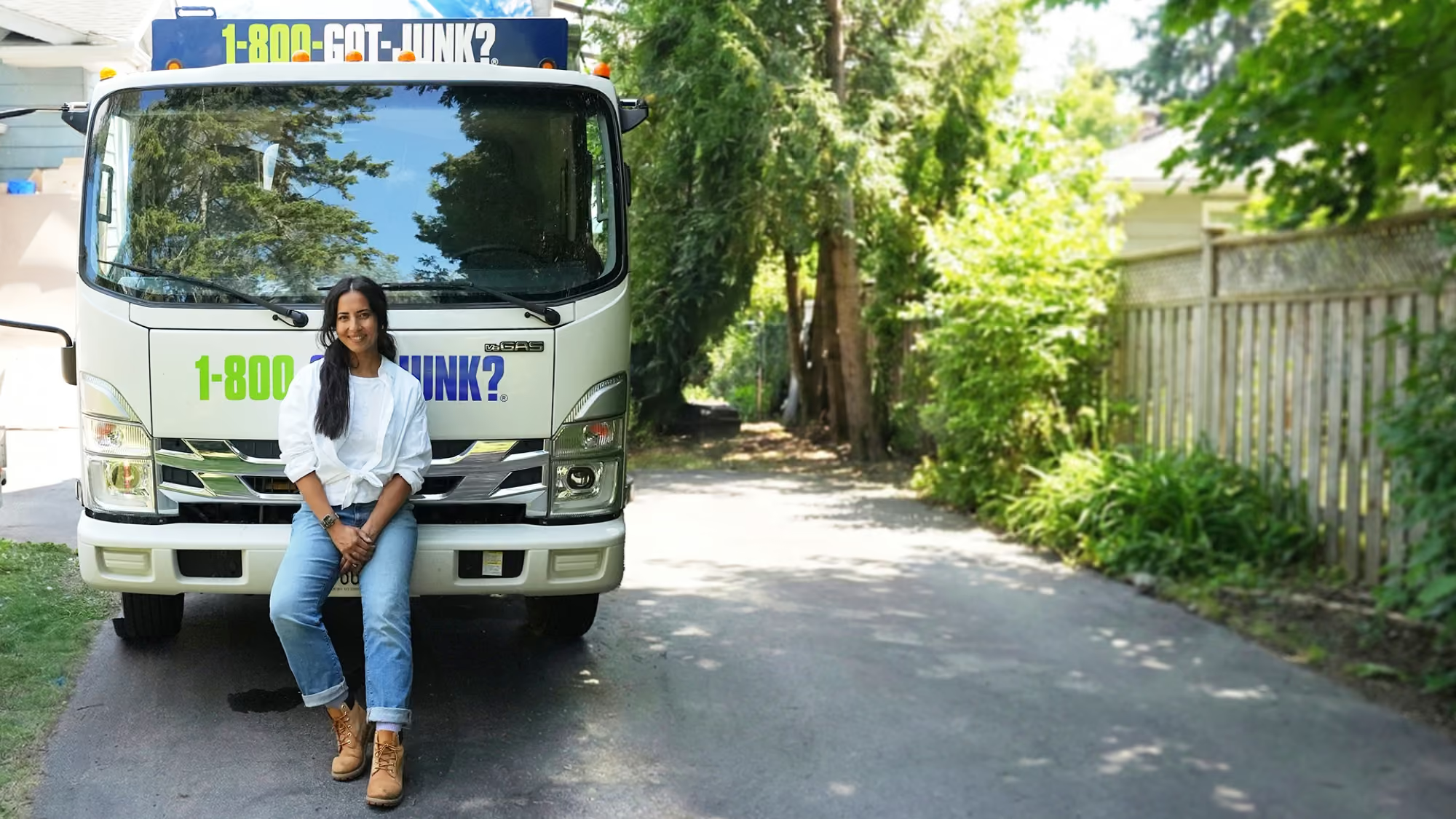
The conversation everyone is avoiding
Parents keep old items, assuming they will be cherished gifts. Children don’t want the items, but accept them quietly to avoid hurting feelings. As a result, possessions continue to pile up in storage units, spare bedrooms, and basements.
The Intentional Burden:
of respondents agree they don’t want their relatives to have to manage or sort through their belongings after they’re gone.
Silence Speaks Volumes:
never discuss inheritance plans with family at all.
Why aren’t we talking about it?
claim they “never needed to discuss it.”
of people who don’t want to inherit anything haven’t told their family.
How to let go of the stuff and hold onto the story
When Jose Ruiz moved back home to California after losing his job, he found his parents’ apartment buried under decades of accumulated belongings. Something told him this moment needed to be witnessed, so he picked up his phone and started filming. Millions of people watched.
What resonated wasn’t the decluttering, but the emotional weight of a lifetime of holding on. For his immigrant parents, who had known instability, physical objects were something solid to hold onto when things felt uncertain. Jose cleared the apartment anyway, working through the arguments and standoffs because he understood what it was really about: the things we inherit represent the weight the generation before us carried so we wouldn’t have to.
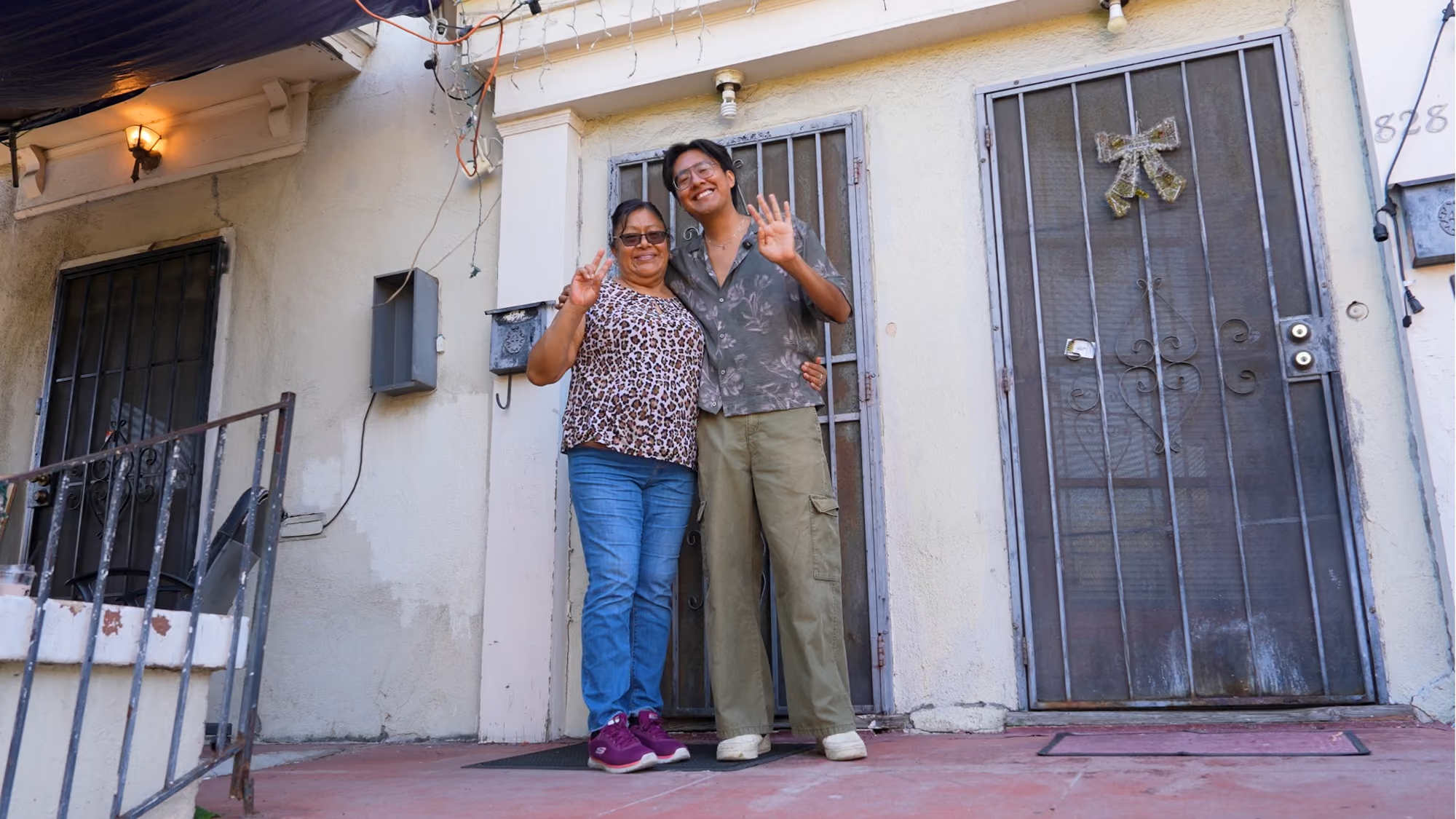
The Great Junk Transfer asks us to separate what we feel from what we’re holding on to. It asks us to trust that the memory survives without the object. To have the conversations we’ve been putting off. To let go.
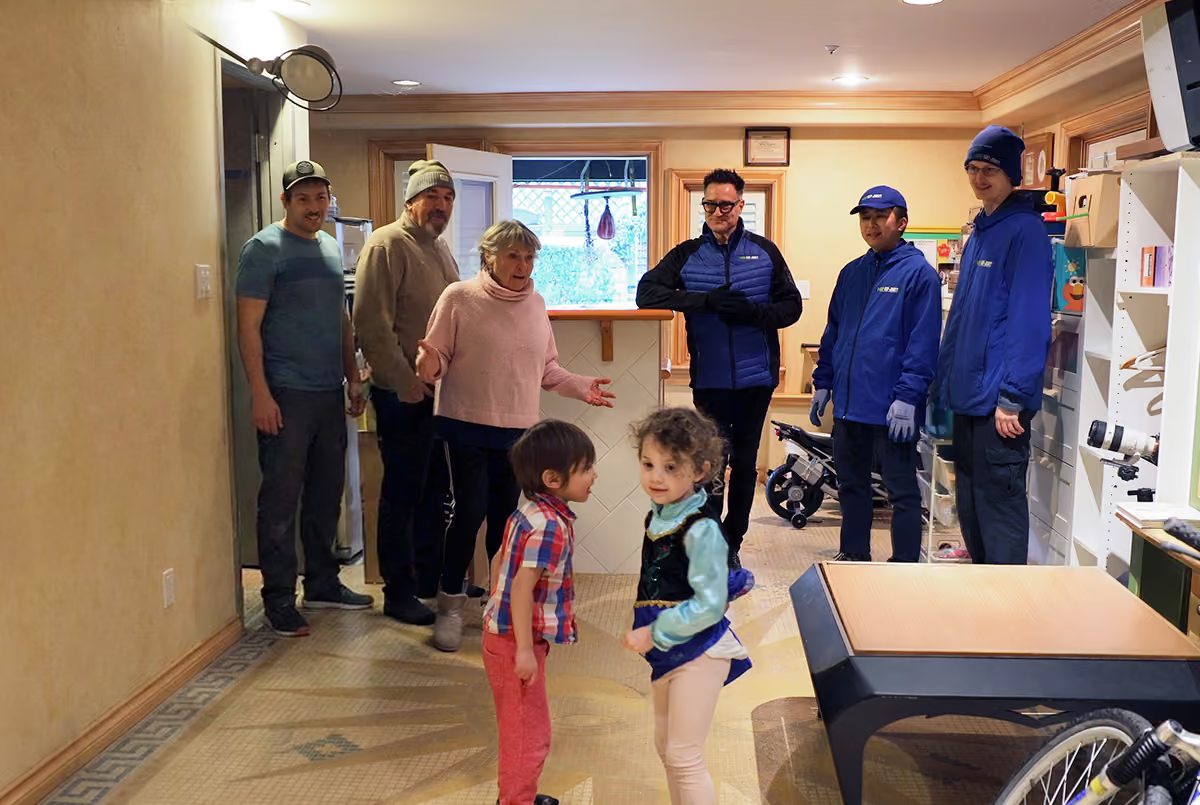

Here’s what 37 years of being invited into people’s homes has taught me: the relief on the other side is always real. When the weight lifts, something new can begin.
We’re not just here to help with the physical side of clearing a home. We’re here so families don’t have to face that weight alone.
— Brian Scudamore, Founder and CEO, 1-800-GOT-JUNK?
About the Study
The survey was commissioned by 1-800-GOT-JUNK? and administered and conducted online by Talker Research between May 22 - May 27, 2026.
We surveyed 2,200 people across the three countries we currently operate in: The United States, Canada, and Australia.
- 1,200 Americans
- 800 Canadians (including 100 in Quebec)
- 200 Australians
¹ Separate proprietary market research commissioned by the company found roughly 25% of North American junk removal bookings (2021–2025) were associated with a loss, inheritance, or estate cleanout.
Get in Touch
Appendix Part I: Quantitative Survey Data
Appendix Part II: Qualitative Responses
Q5: What is the weirdest or most valuable thing (whether sentimental or monetary) you have inherited from your relatives in your home?
- “A bale of cotton. Only because John Wayne signed it and he was friends with my Grandpa.” (US)
- “A jacket from a very well known country music outlaw from the 1970s” (US)
- “I inherited a pet monkey” (Canada)
- “An antique dentist chair” (US)
- “A pig shaped ice cream scoop” (Australia)
- “A VHS copy of the Bonanza show ‘Any Friend of Walters’” (Canada)
- “A stuffed parrot in a glass case” (Australia)
- “My mom’s dentures” (US)
Q13: What’s the most memorable thing you found?
- “I found a $100.00 gas gift card, that was very unexpected and very welcome… Given the rise in gas prices, it felt like I had won the lottery.” (Canada)
- “A wallet with some money that’s been in there for almost 2 years… found when it was time to move” (US)
- “Money I had put away for safe keeping” (US) / “Money that I had left in an old purse that should have been deposited” (Canada)
- “Money and CDs I didn’t know I owned” (Canada)
- “A hard drive from my teen years I thought I threw away. It had tons of old family photos I thought were lost forever, possibly over 12,000 photos total.” (US)
- “A handwritten love letter from the 1940s hidden inside an old book.” (US)
- “An old box of notes and photos from an ex I hadn’t thought about in 17 years.” (US)
Q25: What is the weirdest and/or most valuable thing you plan to give as inheritance?
- “My 6 ft wooden giraffe named Bubba.” (Canada)
- “The movie puppet of Bombshell from Puppet Master: Axis Rising.” (US)
- “I have a memory box for both of my daughters — a snippet from their first haircuts, baby teeth, hospital bracelets… I’m sure they’ll laugh, shake their heads in disbelief and discard the lot.” (Canada)
- “My mint sealed Beatles albums.” (Canada)
- “All types of espresso machines I have.” (Canada)
- “An old fridge with no doors I use as a bookshelf.” (Australia)
- “I told my siblings to have me cremated, and then each of them have a bit of me, and wherever they travel throughout the world, sprinkle me — so they always have me with them.” (Canada)