


What a Harvard Psychiatrist wants you to know before your next cleanout



TL;DR
Harvard psychiatrist, Dr. Blaise Aguirre, says the real reason we hold onto clutter has nothing to do with the objects themselves and understanding the psychology behind it can make letting go a lot easier.
- Decluttering doesn't have to be a big event. Tying the habit to something you already do daily and removing just one item at a time is enough.
- A lot of holding-on behavior traces back to childhood.
- Sentimental value isn't transferable. When in doubt, just ask someone if they want it.
- For objects like photos, keep a small "working collection" that does real memory work.
- Our brains remember emotions and experiences, not things.

Dr. Blaise Aguirre has thought a lot about why we hold on. Here's what he'd like us to consider letting go of instead.
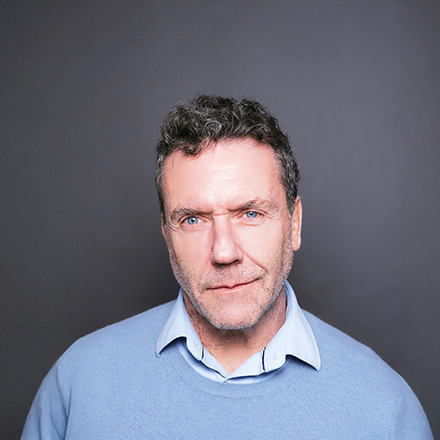
Blaise Aguirre, Assistant Professor of Psychiatry at Harvard Medical School, has spent his career helping people understand their own minds. When the subject of decluttering comes up, he doesn't start with organization systems or donation strategies. He starts with a single question.
Why am I holding on to this?
It sounds simple. It isn't. Because the honest answer, he says, is rarely about the object itself.
The habit that changes everything
Aguirre's own approach to decluttering is surprisingly ordinary. His laundry is in the basement. Every time he goes down to do a load, he removes one thing he no longer needs. That's it. No designated Saturday. No project plan. Just a small, consistent act tethered to something he was already doing.
He suggests picking something you already do every day, like brushing your teeth, and using it as a built-in cue to let go of just one thing. There's something genuinely hopeful in this framing. Decluttering doesn't have to be a reckoning. It can just be a habit, one item at a time.
Where the holding on comes from
Aguirre is interested in the psychology underneath the clutter. He traces a lot of it back to childhood—specifically, to the phrases we heard while we were growing up.
You might need that one day.
Said often enough, that sentence becomes a belief system. Children raised in households where scarcity was named—even casually, even by parents who meant well—absorb a mindset that follows them into adulthood. The fear of not having enough. The discomfort of empty space. The sense that letting go is a kind of risk.
The striking thing, Aguirre notes, is that this mindset persists even in times of abundance. We are surrounded by more than any previous generation has ever owned. And yet the instinct to hold on and keep the thing ‘just in case’ remains. It was learned. The good news is, with some effort, it can be unlearned.
Why your dad’s stamp collection isn't for everyone
When it comes to inheritance, Aguirre has a concept he returns to often: intrinsic value is personal, not transferable.
He tells the story of his own father's stamp collection. His father is still alive, still collecting. Aguirre grew up around stamps, shares the interest, and still catches himself wanting to keep an envelope when a letter arrives. But over time he has pared back; a small, intentional collection rather than an ever-expanding one.
His mother's Bible is different. It has meaning to him because of who she is, and what it represented in her life. That meaning is real, but it would not be the same object in anyone else's hands. The significance doesn't travel with it.
"Meaning," he says, "is in the eye of the beholder."
This is worth sitting with, especially for anyone currently storing boxes of things they feel too guilty to let go of. The question isn't whether the object had meaning. It's whether the meaning belongs to you, or whether you're holding it on behalf of someone else's life.
The framework for actually deciding
This is where Aguirre gets specific.
Think about a box of old photos. The case for keeping them is real: they represent love, history, identity, memory. Getting rid of them can feel like discarding part of yourself, or worse, disrespecting the people in them.
But the case for letting go is equally real. The photos are not the relationship or the memory. Keeping all of them can quietly transform a source of meaning into a source of burden—clutter that breeds anxiety, and eventually, an unwanted inheritance for someone else to navigate.
Both of these things can be true. That tension is the point.
The resolution, he says, isn't to choose one side. It's to ask more precise questions: how often will I actually return to this? What does it genuinely add to what I want to remember? Keep the few that do real work. Release the duplicates, the variations, the ones that wouldn't mean anything to anyone else. (Including you, if you're honest.)
"The memories can remain," he says, "even as you let many of the objects go."
If you're holding on because you think your children might want it one day, just ask them. The conversation might be easier than you expect, and the answer might surprise you.
The Psychology of Clutter: Aguirre’s Core Framework
What our brains actually remember
Aguirre saves his most important point for last, and it reframes the entire conversation around what we own and why.
Imagine two dinner parties.
At the first, you arrive and find pizza on paper plates. The conversation is warm. You feel genuinely welcome.
At the second, the table is set with Royal Doulton china and gold cutlery. The host notices you've picked up the wrong fork and says so.
What do you remember?
Not the plates. Not the cutlery.
"Our brains remember emotions and experiences," Aguirre says. "These are rarely associated with the things you have."
This is the argument at the heart of everything the Great Junk Transfer data is telling us. We have been measuring our lives in objects—accumulating them, storing them, inheriting them, feeling guilty about them—when what we are actually storing is feeling.
Frequently asked questions
How do childhood experiences affect how we declutter?
According to Harvard psychiatrist Dr. Blaise Aguirre, holding onto clutter is often a learned behavior stemming from childhood scarcity mindsets. Phrases like "you might need that one day" create an adult belief system where leaving empty space feels risky, even in times of abundance.
How do you determine if an heirloom is worth keeping?
Dr. Aguirre advises separating the memory from the object. Ask yourself: "Is this object generating anxiety or genuine connection?" If you are keeping an item solely out of guilt to preserve someone else's memory, the intrinsic value is not truly yours, and it can be released.
Why does our brain prioritize experiences over physical belongings?
Neurologically, human memory is wired to retain emotions and social connections rather than material items. As Dr. Aguirre notes, we remember how a dinner party made us feel, not the expensive china it was served on. True sentimental value lives in the memory of the relationship, not the physical artifact.
Similar articles
The one-hour declutter challenge
Ready to reclaim your space without losing your whole weekend? The 1-hour declutter challenge proves that all you need is one room, a 60-minute timer, and three simple boxes: Keep, Donate, and Junk. Ditch the overthinking, grab quick wins with old tech and duplicate tools, and create a lighter, more enjoyable home today—one hour at a time!
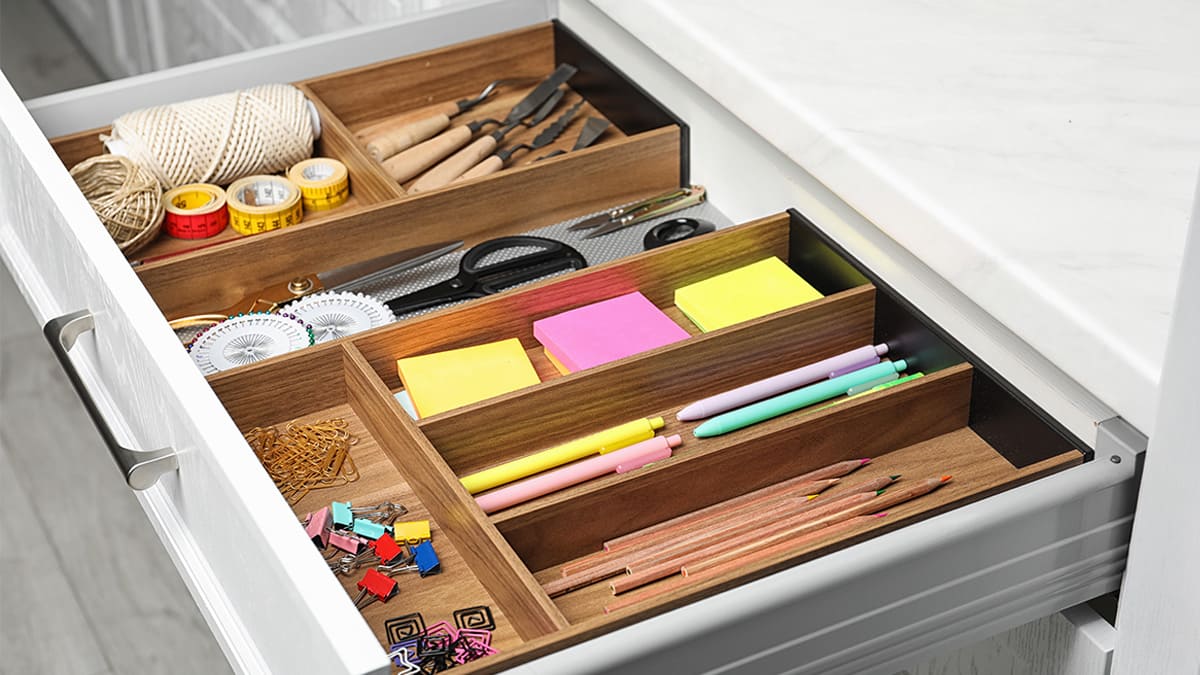
Tip: Start With the Junk Drawer
Tackle your home’s most chaotic spot in just 20 minutes! Everyone has that one drawer overflowing with mystery cables, dead batteries, and random keys. Clearing it out gives you an instant, satisfying win that makes tackling the rest of your space feel easy. Ditch the useless clutter, group what’s left, and turn everyday chaos into an organized, stress-free victory today!