



Advice Line podcast (2024): Brian Scudamore of 1-800-GOT-JUNK? shares his best business advice



TL;DR
Joining Guy Raz on NPR's Advice Line, 1-800-GOT-JUNK? founder Brian Scudamore offered actionable business advice to three rising entrepreneurs. Reflecting on his own journey, Brian explores some key pieces of advice for business owners to consider.
- Resist over-expansion: Let your customers show you what they value most, and focus on being the best at your core concept.
- Embrace your personal story: Your story is your single greatest asset, so don't be afraid to share it.
- Delegate effectively: Empower your team members to handle tasks that are not effective ways to use your time and energy, so you can focus on what you love doing.
- Be willing to fail: Every failure carries a hidden gift and a lesson that prepares you for bigger success down the road.

Originally aired November 7, 2024
Published by: How I Built This on NPR
Host: Guy Raz
Guest: Brian Scudamore, Founder and CEO of 1-800-GOT-JUNK?.
Brian Scudamore shares business insights on Advice Line with Guy Raz
Since starting 1-800-GOT-JUNK? over 35 years ago, I’ve learned a thing or two about running a business. Using all this knowledge I’ve gained over the years, I was delighted to join Guy Raz on his podcast again. It was great to catch up since our last interview on How I Built This, and I was so appreciative when he shared that he often tells people, “Go back and listen to Brian Scudamore's episode. He started his brand with $700."
When we first sat down back in 2017, we talked about how I started 1-800-GOT-JUNK? in 1989 with just $700 and a single beat-up pickup truck in Vancouver, Canada. Coming back to his Advice Line show gave us a chance to dive deeper into what happens after that initial spark, and share some of my business wisdom with 3 eager entrepreneurs!
Staying focused beats expanding too fast in the early days
During the show, we took a call from Theresa, co-founder of Flouwer Co. in Denver, Colorado. She built an incredible brand incorporating edible flowers into crackers and cocktail products, but she found herself at a strategic crossroads: should she expand into multiple gift categories or double down on her core cracker line?
Her dilemma brought me right back to the early days of 1-800-GOT-JUNK?. When we were still called The Rubbish Boys, we tried to be everything to everyone. We hauled trash, moved small loads of furniture, and delivered topsoil. We even had customers asking us to grab shovels and dig landscaping ditches!
Trying to do it all diluted our brand and confused our customers. Everything changed when we listened to what customers actually wanted. They didn't want us digging ditches, they wanted us to make their junk disappear. The moment we narrowed our focus to become the world's largest junk removal service, our momentum skyrocketed. My advice to Theresa (and to any founder) is simple: grow where you are planted, solve your core operational bottlenecks, and let your customers show you what they value most.
The founder needs to be the authentic voice of the brand
One of my favorite topics we covered on the show was the power of founder storytelling. Guy pointed out that I am still the public face of 1-800-GOT-JUNK?, appearing in TV commercials and voicing our radio campaigns. He asked whether founders should actively remain part of their brand's story.
I remember when Roy Williams, our longtime radio creative partner at the Wizard of Ads, first told me that I needed to be the voice on our radio spots. I was hesitant at first because I didn't want the brand to be all about me. But Roy made a point that changed my perspective forever: customers buy into a founder's passion and origin story in a way they never will with a hired spokesperson.
People connect with real human experiences. They love hearing about the McDonald's drive-thru moment that sparked a $700 pickup truck business. While every founder needs an exceptional operational partner (like our COO and President Erik Church, who brings the discipline required to scale our day-to-day operations), the founder brings an irreplaceable heart and passion. Your story is your single greatest asset, so don't be afraid to share it!
How to position your core benefit and leverage your origin story
Our second caller, Jake Pressman from Notion Skincare in Los Angeles, California, was struggling to define his target audience and messaging for his waterless, powder face cleanser. His product was cruelty-free, vegan, eco-friendly, and travel-friendly, but his ads were getting lost in a sea of generic industry buzzwords.
When Guy and I looked at his brand, we noticed something missing… the clear, primary benefit to the customer! When customers visit a website or see an ad, they don't just want a list of features or trendy ingredients. They want to know, "What does this do for me?" In Jake's case, his true differentiator was customizability. By allowing users to control the texture and intensity of their wash simply by adjusting the amount of water they add, his skincare line was uniquely customizable for each person’s needs.
Along similar lines to my advice on having an authentic founder voice, I also encouraged Jake to bring his personal history to the forefront. Growing up around his father and grandfather in the beauty manufacturing space gave him third-generation credibility that money can't buy. When you combine a clear, easy-to-understand customer benefit with an authentic personal origin story, you create a brand that people trust and remember.
Why delegating tasks and embracing failure drive real growth
Our final caller was Theo Alex Dean, founder of Fox & Hen Fine Poultry Co. in Shingle Springs, California. After a rapid launch in 2021 that left him overwhelmed by 50 phone calls a day, Theo pulled back to rebuild. He asked us a fundamental question that every entrepreneur eventually faces: how do you know when it's time to delegate tasks and hire help?
I shared a framework that has guided me for over 35 years in business. Calculate what your time is worth, identify what you love and excel at, and delegate the rest. If running your business generates $100,000 in revenue across 100 hours of work, your time is worth $1,000 an hour. Carrying out tasks that you dislike or excel less at, whether it's driving delivery routes or managing administrative schedules, is an inefficient use of your energy when you could empower talented team members to handle those roles.
More importantly, I commended Theo for embracing his early setback. When I fired my entire 11-person team five years into 1-800-GOT-JUNK?, it felt like a total disaster. But that reset taught me that we were in the people business, paving the way for our people-first culture. Every failure carries a hidden gift and a lesson that prepares you for bigger success down the road.
Read the full interview
It was great to speak to Guy Raz and these three up and coming entrepreneurs about their business ventures. It reminded me of being on Dragon’s Den, where you're taking some businesses and learning about them on the fly, but this time simply asking some questions and offering some advice.
Interested in reading the full conversation, including some fun discussions about blue eggs? Expand below to hear even more great business advice from myself and Guy Raz.
Read the full transcript below
[00:02:55:28 - 00:03:18:02] Guy Raz: Hello and welcome to the Advice Line on How I Built This Lab. I'm Guy Raz. This is the place where we help try to solve your business challenges. Each week I'm joined by a legendary founder, a former guest on the show, who will help me try to help you. If you are building something and you need advice, give us a call, and you might just be the next guest on the show.
[00:03:18:07 - 00:03:44:01] Guy Raz: Our number is 1-800-433-1298. Send us a one-minute message that tells us about your business and the issues or questions that you would like help with. You can also send us a voice memo at hibt@id.wondery.com and make sure to tell us how to reach you. Don't forget to sign up for my newsletter. It's full of insights and ideas from the world's greatest entrepreneurs.
[00:03:44:01 - 00:04:01:01] Guy Raz: You can sign up for free at guyraz.com. We'll put all this info in the podcast description. All right, let's get to it. Joining me this week is Brian Scudamore, the founder of 1-800-GOT-JUNK? and the CEO of O2E Brands. Brian, welcome back to the show.
[00:04:01:03 - 00:04:03:05] Brian Scudamore: I am so stoked to be here. Thanks, Guy.
[00:04:03:05 - 00:04:20:01] Guy Raz: It's awesome having you back. You were first on How I Built This way back in 2017. It was such an awesome episode, and you told us the incredible story of how you started 1-800-GOT-JUNK?. Of course, anyone listening, if you haven't heard that story, go back and check it out. We'll put a link to that episode in the podcast description.
[00:04:20:01 - 00:04:37:18] Guy Raz: Basically, you were looking for a way to make extra cash to help pay for college. This was in 1989. You were in Vancouver, Canada. You bought a pickup truck for 700 bucks, and then you just started hauling away people's trash to make money. It was just a side hustle at first while you were in school.
[00:04:37:18 - 00:04:54:15] Brian Scudamore: It was a side hustle to pay for school, and I ended up learning so much more about business by running a business versus studying in school that I made a tough decision. With a year left in my degree, I decided to drop out, started hauling junk full-time, and here we are today. 1-800-GOT-JUNK? is a $700 million business.
[00:04:54:17 - 00:05:15:01] Guy Raz: And it's absolutely incredible. You've got franchises all across Canada, the U.S., Australia. You have also branched out. You have a parent company called O2E Brands. You guys have something called WOW 1 Day Painting. You've got a cleaning service called Shack Shine. It's so cool. By the way, I often refer back to this. We've had 700 episodes of the show.
[00:05:15:02 - 00:05:35:20] Guy Raz: I often refer back to this episode to yours because people say, "Oh, you know, I don't have a whole lot of startup cash." I say, "Go back and listen to Brian Scudamore's episode. He started his brand with $700." The genius of this idea was that one truck soon paid for itself and generated enough money for you to buy a second truck and then hire a friend to do the same thing.
[00:05:35:21 - 00:05:50:09] Brian Scudamore: Yes, my business, and this is unheard of, was profitable in two weeks. How does that happen? You go and raise startup capital and start an app, and then you're years and years before you even have any real revenue. Yes, so it's been an unbelievable model, and I've been very fortunate.
[00:05:50:09 - 00:05:54:24] Guy Raz: And it really just started out with some muscle, just hauling crap out of people's homes.
[00:05:54:24 - 00:06:09:03] Brian Scudamore: It was an idea that was simple. I think the simplicity of nobody has ever branded this space of junk removal. Yes, that's what we did. First-mover advantage. We're in Canada, the U.S., Australia, and we continue to grow.
[00:06:09:08 - 00:06:27:00] Guy Raz: All right. Well, Brian, before we get to our callers today, I have a couple of questions for you. I want to start by asking you, you know, a lot of entrepreneurs struggle with the question of focus versus expansion. You know, whether to stay with that core product or when to expand to others.
[00:06:27:01 - 00:06:36:25] Guy Raz: At what point did you decide that it was a good idea to branch out into painting and then house cleaning services, rather than just staying focused on junk removal?
[00:06:36:25 - 00:06:59:13] Brian Scudamore: I think it was a moment of serendipity. I was looking for another business and couldn't find one. My ego wanted another business so we could just take over another space. But then serendipity had it where I got an estimate for my house to get painted, and I had three quotes. The first two, you know, cigarette smoke hanging out of their mouth, and they showed up late, and you felt like they were going to move into your house for a couple of weeks.
[00:06:59:16 - 00:07:17:08] Brian Scudamore: The third guy comes in and says, "Molding, ceiling, floors to ceiling, moldings, trim, I'll have it done in a day." That was their model: paint your whole home in a day without any compromise to quality. I looked at that business and I said, "I've done well franchising 1-800-GOT-JUNK?. I think I can help you."
[00:07:17:09 - 00:07:39:06] Brian Scudamore: "Have you looked at franchising your business?" We ultimately bought his company, and we took the model and we called it WOW 1 Day Painting because that's how I felt the moment I walked in the home, and we started to franchise it. Now it's on track. One day it will be bigger than 1-800-GOT-JUNK?, simply because the painting space is even that much larger than junk removal.
[00:07:39:08 - 00:07:55:15] Guy Raz: Yes, it's so cool. You are still the public face of 1-800-GOT-JUNK?. If you go to the website, there's a video of you right there on the homepage. Do you think it's important as a founder to be part of the story or the presentation of the brand?
[00:07:55:17 - 00:08:12:06] Brian Scudamore: I think there's a voice that a founder brings that no one else can. I was asked by Roy Williams, who does our radio creative, when he first curated our radio campaigns. He said, "Brian, you need to be the voice on radio." I said, "Well, I don't know if I want it to be all about me."
[00:08:12:06 - 00:08:41:07] Brian Scudamore: He said, "It has to be. You're the founder. You've got the McDonald's drive-through story, and that's where the ads are going to start." I went with it, and no looking back. Everyone buys into a founder story in a different way than a hired gun. Now, us founders need hired guns. I've got my Eric Church, who is unbelievable at scaling our business as an implementer, but the founder has a persona and a commitment and passion for a business that's been there from day one.
[00:08:41:14 - 00:08:52:11] Guy Raz: Yes, no question about it. Brian, it's so great to have you back on. I'm sorry I haven't seen you in a couple of years. I've got to get back up to Vancouver, and I promise I will. Why don't we take a couple of calls while we're here together?
[00:08:52:12 - 00:08:53:13] Brian Scudamore: I would love that.
[00:08:53:14 - 00:09:06:11] Guy Raz: Okay, so let's get our first caller on the line. Welcome to the How I Built This Advice Line. You're on with me and Brian Scudamore. Please introduce yourself. Tell us your name, where you're calling from, and just a little tiny bit about your business.
[00:09:06:17 - 00:09:27:28] Theresa: Hi, Guy and Brian. Thank you so much. I'm calling from Denver, Colorado. I'm the co-founder of Flouwer Co. We are a food and lifestyle brand inspired by nature. We incorporate edible flowers into our products to bring unexpected beauty to the everyday, from crackers to cocktails.
[00:09:27:29 - 00:09:30:29] Guy Raz: Nice. Oh, did you tell us your name? Maybe I missed that.
[00:09:31:01 - 00:09:31:21] Theresa: Theresa.
[00:09:31:23 - 00:09:45:16] Guy Raz: Theresa. Okay, welcome to the show. Thank you. So, all right, so the company is called Flouwer, but it's spelled not F-L-O-U-R, it’s F-L-O-U-W-E-R, like a merging of flour and flower.
[00:09:45:17 - 00:10:10:22] Theresa: Correct. Yes. Our flagship product was a cracker, and so in lots of crackers we have flour. But our company is based around introducing people to edible flowers and incorporating those in everyday products that edible flowers give an interesting flavor and color and texture to a lot of things that we don't normally add them to.
[00:10:10:23 - 00:10:24:01] Guy Raz: Oh, what a cool idea. Okay, so you're in Colorado, you're in Denver. When did you start doing this, and how? I mean, it's a great idea. Were you in food? Was that your business?
[00:10:24:08 - 00:10:49:09] Theresa: My business partner and I joined together in 2019. We were initially doing charcuterie boards and incorporating edible flowers in whatever we could. You know, we eat first with our eyes, so we wanted to make them as beautiful as possible. We couldn't find a cracker that we really liked, so we started tinkering around the kitchen and developed this beautiful cracker.
[00:10:49:09 - 00:11:07:12] Theresa: Whenever we would deliver them to our clients, they would just be wowed and say, "Oh my gosh, these are so amazing and beautiful. The taste is there. The look is there. They're just fun to eat. They create an experience in themselves." I love making a buzz at an event where people are like, "Oh wow, what's that?"
[00:11:07:13 - 00:11:09:10] Theresa: So, yes, that's how we got started.
[00:11:09:10 - 00:11:14:16] Guy Raz: What a cool idea. Okay, tell us what question you brought for us today.
[00:11:14:17 - 00:11:41:22] Theresa: Yes. So my question is essentially in strategy. As we're moving into our next phase of growth, we just recently acquired a co-manufacturer that's going to allow us to produce a lot more than we have in the past. So should we be focusing on our cracker line, creating more of like a brand block within the grocery space, or should we be expanding into different categories?
[00:11:41:25 - 00:12:04:00] Theresa: The problem is what we're finding, because we have expanded into like the cocktail space in the past. We're finding that a lot of our national distributors, they don't necessarily want to carry all of the lines at once. We have some distributors that want to carry all the grocery, the more cracker lines, and then other distributors who want to carry more of the gift lines.
[00:12:04:01 - 00:12:11:03] Theresa: So I guess my question is, is it wise to be more diverse, or is that just diluting our focus?
[00:12:11:07 - 00:12:18:28] Guy Raz: Okay, interesting. Brian, before we answer Theresa's question, I think you have some questions for her.
[00:12:19:02 - 00:12:27:09] Brian Scudamore: Yes. Nice to meet you, Theresa. My big question is, what percentage of your current revenue is in crackers?
[00:12:27:11 - 00:12:39:07] Theresa: So that's a tricky question, to be honest. For this year, the cracker production in self-manufacturing was extremely expensive. It was not cost-effective.
[00:12:39:08 - 00:12:42:02] Guy Raz: You guys were doing it yourself in a kitchen? Yes.
[00:12:42:02 - 00:12:53:00] Theresa: And it's not exactly cost-effective, no. Hence our development of our other products that were a little less laborious. Our margins were much better on those.
[00:12:53:01 - 00:12:59:13] Guy Raz: Can you just tell us briefly about one or two? What are those products in the cocktail space? What is it? Are you like syrups or what?
[00:12:59:16 - 00:13:24:01] Theresa: Sure. So we made cocktail cubes, which is essentially a flavored sugar cube with flower petals in the sugar cube. As it dissolves in your drink, you get these beautiful flower petals that float in your cocktail and also flavor your cocktail gently. So perfect for a glass of Prosecco. I pop a couple of lavender cocktail cubes in a glass of Prosecco, and it's chef's kiss.
[00:13:24:03 - 00:13:31:29] Guy Raz: Nice. Okay, so you guys were just back to Brian's question. You slowed down on the cracker production because it was inefficient.
[00:13:32:00 - 00:13:58:01] Theresa: It's inefficient. We were in search of a co-manufacturer. We thought we had one ready to go, and it didn't quite work out. We have now settled on a co-manufacturer that will make the crackers to our standards. You know, where we could produce 17 cases in a day, they can produce 170 cases in a day. So our labor cost is just like, it's night and day.
[00:13:58:02 - 00:14:24:19] Theresa: Yes. Frankly, we originated with three cracker flavors, and we backed off those three flavors and only went to one because of production limitations. Now that we have the opportunity, we could conceivably launch the other two flavors as we go. But I'm just wondering if it doesn't make more sense to develop some of our other ideas that are not in the cracker space.
[00:14:24:20 - 00:14:46:29] Brian Scudamore: When I hear you talk about your business, it takes me back into the early days of 1-800-GOT-JUNK?. We were called The Rubbish Boys. Our phone number was 738-JUNK, and we could do a lot with the truck. We could do some small moves. We could deliver bedloads of topsoil. We could use that truck to do deliveries and, of course, junk removal.
[00:14:46:29 - 00:15:09:07] Brian Scudamore: So we tried being all things to all people, and it diluted us like crazy. People that wanted junk removal also wanted us to go get some shovels and dig some ditches and do some landscaping. It got confusing to the customer. I believe customers vote with their wallets. They tell you what they value the most, and by far and away it was junk removal.
[00:15:09:07 - 00:15:35:26] Brian Scudamore: So we narrowed our focus and said, "We are going to be the world's largest junk removal company, and that's all we're going to do." We stopped doing everything else. When I look at your brand, and you're trying to figure out if you get into other products or not, it sounds to me like you had crackers, which launched the company for you, but now you've run into some challenges, costs and so on, and you're looking at other products.
[00:15:35:28 - 00:15:50:28] Brian Scudamore: My advice would be, how do you test a bunch of different things lightly without a big investment to figure out what are customers voting for with their wallets? What do they like the most? Then how do you scale that part of the business?
[00:15:51:00 - 00:16:08:26] Theresa: That's great advice. We do have a brick-and-mortar store here in Denver. Initially, that was our thought: that could be kind of our test market. You know, have products that we're testing and put them on the shelf and see which ones people gravitate towards.
[00:16:08:27 - 00:16:14:02] Guy Raz: Can you give us a sense of what you expect to do in terms of sales this year?
[00:16:14:04 - 00:16:16:13] Theresa: Yes, we're about $1 million.
[00:16:16:13 - 00:16:18:10] Guy Raz: Great. That's awesome.
[00:16:18:12 - 00:16:39:04] Theresa: Yes, but it's been a really rough year, I won't lie, with the co-man search. Yes, we let go of our baking staff probably a little bit prematurely, but the writing was on the wall. We needed to scale. We couldn't continue doing what we were doing, so it kind of forced us into this.
[00:16:39:06 - 00:16:58:03] Guy Raz: So the retailers right now, the ones that are carrying the crackers, they really just want foods. They want like crackers and other kinds of foods because they would place it all together on the shelves. Right. They're less interested in the cocktail sugars and the, you know, I'm seeing here like finishing sugars and even candles, for example.
[00:16:58:05 - 00:17:25:00] Theresa: Right, exactly. We sell a lot to small gift shops, and a lot of them carry all of our products. But when we go into the national distribution space, they're a little bit more specialized. We have lots of ideas that speak to our company and our ethos. But because we are bootstrapped, we have to place our dollars in a strategic place.
[00:17:25:00 - 00:17:27:13] Theresa: So we can't do all of it at once.
[00:17:27:19 - 00:17:49:07] Guy Raz: Yes. It seems to me that you really landed on something unique, right? Pressed flowers and crackers is not something I've seen anywhere. To me, it seems like that's a really awesome opportunity to create a completely new product in a pretty saturated category. Crackers, cookie, you know, there's a lot of them. But there's nothing with flowers.
[00:17:49:07 - 00:17:52:09] Guy Raz: And that looks as beautiful as these do.
[00:17:52:10 - 00:18:16:08] Brian Scudamore: Yes. When I look at your box, Theresa, I'm looking online at your website. The box and the brand are incredible. What it says and how it looks is awesome. To me, my gut, you're doing a million in revenue. When I look through the website of everything that you're offering in different products, you want to diversify in. The one that catches my eye the most by far is the cracker.
[00:18:16:10 - 00:18:37:02] Brian Scudamore: It's how you got started. It's your story. It is beautiful. My wife loves making charcuterie plates, and wow, she'd put these crackers on there in a heartbeat. So that's where I would focus. How do you build that out? You've been faced with some obstacles cost-wise. To me, it's how do you solve those versus ignoring that problem and diversifying into something else?
[00:18:37:10 - 00:18:59:04] Theresa: Yes, and I do believe that the co-manufacturer is going to solve those problems. So that's kind of why I'm looking. We're always trying to look forward. Right. So I'm trying to think, "Okay, we've hopefully solved that problem, and now we're trying to move on to the next thing." But I hear what you're saying. I think our crackers are beautiful.
[00:18:59:04 - 00:19:05:18] Theresa: I think we've resisted being a cracker company. However, I think we do it best.
[00:19:05:23 - 00:19:08:20] Brian Scudamore: Yes. Own it, own it. You're a cracker company.
[00:19:08:21 - 00:19:24:23] Guy Raz: Yes. Do you have an opportunity to do like rosemary flavored and garlic flavored crackers, and even like a parmesan? There are so many different things you could do with the flower, with that beautiful look, with different flavors.
[00:19:24:25 - 00:19:49:11] Brian Scudamore: In a digital world, it's so easy now with TikTok and Instagram to have people on a larger, American-wide scale blow this up for you in a great way, because there are so many food TikToks watching people make things. Everyone's competing to look more beautiful with their charcuterie platter than anyone else. Imagine having your brand on that wood board.
[00:19:49:12 - 00:19:51:11] Brian Scudamore: I mean, it could be awesome.
[00:19:51:18 - 00:19:56:27] Theresa: Yes, absolutely, Brian. We'll definitely take your advice. Thank you so much, Theresa.
[00:19:56:28 - 00:20:02:13] Guy Raz: Good luck. The brand is called Flouwer Company. Good luck.
[00:20:02:14 - 00:20:04:22] Theresa: Thank you so much, Guy and Brian. Have a great day.
[00:20:04:22 - 00:20:05:14] Guy Raz: Thank you.
[00:20:05:15 - 00:20:06:15] Brian Scudamore: Thanks, Theresa.
[00:20:06:17 - 00:20:08:23] Theresa: Bye bye.
[00:20:08:26 - 00:20:22:11] Guy Raz: You mentioned that your wife likes to make charcuterie boards, and I love to make crudité plates, especially in the summer, Brian. So next time you come down here, I'll make you one. Normally I don't have crackers there, but these are like stand-out crackers.
[00:20:22:12 - 00:20:28:21] Brian Scudamore: No, they are. They're beautiful. That's where I kept getting stuck. Why is Theresa looking to diversify?
[00:20:28:25 - 00:20:30:10] Guy Raz: When she's onto something?
[00:20:30:11 - 00:20:37:15] Brian Scudamore: Yes, it sounds like she was trying to diversify because of problems and obstacles. No, no, no, no. Go solve those with your co-packer.
[00:20:37:18 - 00:20:53:26] Guy Raz: Yes. You know, she could still, I like the idea of doing a flower petal company, you know. You could still do the cocktail sugars and all that stuff, but to me, I think that there's just a really great opportunity with the crackers because nobody's doing anything like this right now.
[00:20:53:29 - 00:20:57:21] Brian Scudamore: Yes. Grow where you're planted. That's where they got their start, and it's working.
[00:20:57:23 - 00:21:21:11] Guy Raz: We're going to take a quick break, but when we come back, another caller, another question, and another round of advice. I'm Guy Raz. Stick around. You're listening to the Advice Line on How I Built This Lab.
[00:21:21:13 - 00:21:33:26] Guy Raz: Welcome back to the Advice Line on How I Built This Lab. I'm Guy Raz, and my guest today is Brian Scudamore. He's the founder of the junk removal service 1-800-GOT-JUNK?. What do you say, Brian? Should we take another call?
[00:21:33:28 - 00:21:34:25] Brian Scudamore: Let's do it.
[00:21:34:25 - 00:21:45:04] Guy Raz: All right. Cool. Let's bring in our next caller. Hello. Welcome to the Advice Line. You are on with Brian Scudamore. Please tell us your name, where you're calling from, and a little bit about your brand.
[00:21:45:06 - 00:22:04:27] Jake Pressman: Hi, Guy. Hi, Brian. Thank you so much for having me on. My name is Jake Pressman. I'm calling from Los Angeles, California. I'm the founder and CEO and everything else of Notion Skincare. Our hero product is a high-quality powder face cleanser that's sustainable, travel-friendly, and customizable to fit each user's needs.
[00:22:04:29 - 00:22:07:12] Guy Raz: A powder face cleaner?
[00:22:07:13 - 00:22:14:13] Jake Pressman: Yes, exactly. How it works is you add a dash of the powder into your hand, and you add the amount of water you want to get your desired texture.
[00:22:14:14 - 00:22:17:15] Guy Raz: You make like a paste or like, I guess it turns into a lotion.
[00:22:17:15 - 00:22:39:02] Jake Pressman: So it turns into a foam or a paste, depending on how much water you use. The more water you use, the foamier and gentler it will be. The less water you use, the more exfoliating it'll be, like a more intense wash you'll get. Just as some background, most face cleansers and personal care products on the market are up to 80% water and packaged in plastic and heavy to ship.
[00:22:39:04 - 00:22:47:16] Jake Pressman: Yes, ours is a powder that you can take with you anywhere. It gets around the TSA liquid restriction, so you can travel freely with it, and it's customizable.
[00:22:47:17 - 00:22:59:01] Guy Raz: The idea is that you're selling a concentrate, right? Because what you're saying is that most lotions are 80% water. You're removing the water, so I guess you could argue that you're actually getting more bang for your buck.
[00:22:59:02 - 00:23:00:11] Jake Pressman: Exactly.
[00:23:00:13 - 00:23:04:25] Guy Raz: Interesting. This is cool. How did you come up with this idea?
[00:23:04:26 - 00:23:25:01] Jake Pressman: I grew up watching my dad and grandfather work in the manufacturing side of the beauty industry, and working at their company during summers in high school and college. I was actually originally using a powder exfoliator as my face wash every day, which I now know that you're not supposed to use an exfoliator as your cleanser multiple times a day.
[00:23:25:01 - 00:23:55:12] Jake Pressman: But when I discovered this, I was looking for alternatives. I really liked that experience of using a powder, and traditional face cleansers didn't really meet my expectations, and a few other powder options on the market didn't really cut it for me. So I decided to try and make my own. After 30-plus iterations of testing on my own skin, which is super sensitive, and my family's and friends' skin, I finally got it to where I thought it was perfect after two years, and I launched it online last year.
[00:23:55:18 - 00:24:05:21] Guy Raz: Wow. Congratulations. Okay. How are you doing so far in terms of sales? Roughly, have you broken $10,000 in sales?
[00:24:05:22 - 00:24:09:04] Jake Pressman: Yes, I'm a little bit below $20,000.
[00:24:09:05 - 00:24:10:23] Guy Raz: Nice. Okay.
[00:24:10:25 - 00:24:14:27] Jake Pressman: But yes, that will kind of lead into my question that I have for you guys.
[00:24:14:29 - 00:24:16:17] Guy Raz: Please tell us your question.
[00:24:16:17 - 00:24:36:13] Jake Pressman: I'm having trouble determining who my customer is and the messaging that I should have behind my ads. I'm not sure if I should position it and market it more as a travel product, or try targeting people who really want to customize their skincare routine and have an experience that they can tailor to their own needs every time.
[00:24:36:15 - 00:24:40:10] Jake Pressman: Long way of asking is, how do I make sure I'm targeting the right person?
[00:24:40:10 - 00:24:44:03] Guy Raz: Yes. All right, Brian Scudamore, jump into this, please.
[00:24:44:07 - 00:25:08:15] Brian Scudamore: Yes. I was looking at your website, Jake, and it's a beautiful website. What isn't jumping out for me, and I could see myself using the product, there's something interesting, like you said, about the texture of it and adding more or less water, depending on the experience. But I'm having trouble figuring out what is the real benefit here. You talk about it being vegan, cruelty-free, good for the environment, for animals.
[00:25:08:15 - 00:25:13:09] Brian Scudamore: I'm trying to go, what is it really about this that makes it unique and special here?
[00:25:13:13 - 00:25:29:00] Jake Pressman: Other than it being a great skincare product on its own, you know, it has all the trendy and effective ingredients in it. Yes, but I do think the main benefit is being able to customize it every time and make it like a wash just for you.
[00:25:29:02 - 00:25:46:29] Guy Raz: Jake, as you probably know, we've done a lot of brands in the show that, you know, one for one and our social enterprises, and at the end of the day, the vast majority of consumers just don't care about that. We wish they would care more, but they don't, right? They really want to know, "What does this do for me?"
[00:25:46:29 - 00:26:03:13] Guy Raz: If you go to the website, it's very clean. Your branding is really nice. It's like the kind of premium product you would find in a hotel, you know, where you could buy it from the little minibar. But it just says, you know, vegan, waterless, cruelty-free, sulfate-free. That's all great, but that can go down below.
[00:26:03:19 - 00:26:25:08] Guy Raz: To me, I want to hear, you know, "infinitely customizable for all skin types with, you know," I can, I'm looking at the label here, and I see green tea extract, rice powder, colloidal oatmeal. But it's tiny. You have to find that. To me, that's what I want to see right at the get-go, because that sets the tone for what you're about to potentially buy, right?
[00:26:25:10 - 00:26:54:04] Brian Scudamore: The story working with your grandfather in this sort of same space and how you've grown up building your own product and why, I think having your story show up. It isn't just the brand look and feel, but you are the face of, the clean face of, this company. What is your story? Because I think people buy brands they connect to, and buying into a brand is so much more than just the rice powder and the oatmeal.
[00:26:54:06 - 00:27:14:15] Brian Scudamore: It's you. Is there a way to even tie your story and the name Notion? You talk about the fact that your number one unique selling point here is that it's a customizable product to whatever you want at any point in time. How do you tie those things together? I don't know the answers, of course, but food for thought.
[00:27:14:16 - 00:27:16:02] Jake Pressman: Okay. Thank you.
[00:27:16:09 - 00:27:35:17] Guy Raz: Jake, who right now? I mean, who do you imagine using? This is it. Is it everybody? Is it a certain age demographic? You look at brands like Drunk Elephant, which we've done on the show, and originally was made for women over 40. TikTok has changed that. Now you see teenage girls are using it.
[00:27:35:19 - 00:27:39:14] Guy Raz: Who do you imagine using this powder, using Notion?
[00:27:39:15 - 00:28:09:19] Jake Pressman: Well, other than myself, in my mind, the target user is mainly women probably between like 20 and 35. I've had, you know, some older people like 60-plus give me great feedback. But also, I have my friends that are all in their 20s using it as well. But in my mind and how I envision marketing it, it's probably for women between 20 and 35.
[00:28:09:24 - 00:28:29:27] Guy Raz: Brian, I think Jake has an opportunity here to answer his question by testing it out, right? Without knowing in advance who the target audience is. There might be ways to kind of test out the answer, right? To target different groups. I don't know, I mean, how would he do that?
[00:28:29:29 - 00:28:54:27] Brian Scudamore: If it was me, I would pick some. They don't even have to be necessarily micro-influencers, but people whose opinion would matter to you in a diverse enough group of your targeted potential customers. I'd send them the product and say, "Could you do me a favor? Do me a video. You don't even have to share it if you don't want, but tell me all the things you love about this product and why."
[00:28:55:03 - 00:29:15:06] Brian Scudamore: Tell me what stood out for you. Don't tell them the things that you're looking for, but find out. Just ask them, "Would you use this? Did you like it? Why?" See how they connect to the product. Then maybe you do another round, and you get some micro-influencers to share these TikTok videos. I mean, I've got teenage daughters.
[00:29:15:06 - 00:29:32:02] Brian Scudamore: I see what they do, and they put on makeup and show the world, right? They do a fit check, they do a makeup check, and they blast it out. If your product is something meaningful to a certain demographic, who wants to then talk about it on social, that's where these things really go viral.
[00:29:32:03 - 00:30:00:24] Guy Raz: I think there's maybe, by the way, we're hearing from everybody across the board. Brian, you may even be facing this issue, which is that customer acquisition through social media has become much, much harder. There's just so much more noise out there. But I wonder whether you target travelers, people who travel frequently, who just don't want to have to take all their stuff out of their bag when it goes to the TSA line, you know?
[00:30:00:25 - 00:30:21:03] Guy Raz: A lot of frequent travelers are TSA PreCheck, so they've got to get to their flight quickly. If the lotion size is four ounces, then it's going to be another ten minutes of a delay. To me, it might be interesting to see if you can try to target people who frequently travel.
[00:30:21:05 - 00:30:28:08] Guy Raz: So forget about men, women, young, old. Just see if that sort of clicks in some way.
[00:30:28:11 - 00:30:59:27] Jake Pressman: Yes. No, I love that. Every time I've been traveling now, I've taken a video of the product going through the TSA belt. I'll have random comments from what I was doing, those TikTok ads, being like, "No, this will make you get stopped. It'll get longer." I mean, I've been around the country with this, and I have never had one problem. I've done an experiment where I've taken a traditional face cleanser and just put it in to see what would happen.
[00:30:59:27 - 00:31:01:23] Jake Pressman: Of course, it got thrown away.
[00:31:01:28 - 00:31:14:14] Brian Scudamore: I think your brand lends itself to having some fun with the word "no” that is in “Notion”. No TSA delays. No water. No problems. There could be something there.
[00:31:14:17 - 00:31:16:15] Jake Pressman: Yes, I love that. Thank you.
[00:31:16:16 - 00:31:34:24] Guy Raz: I like that. That's cool. I like that idea. This is also the kind of product that you may want to consider, you know, look, you're in LA. This is the media capital of the United States, right? New York, too. You have an advantage of being in Los Angeles. There are celebrities. There are a lot of influential [people].
[00:31:34:25 - 00:31:55:23] Guy Raz: It's a cultural capital. It's where trends start. To me, I could see you taking this to like the Proper Hotel in downtown LA or in Santa Monica, or one of these really cool boutique hotels and seeing if they'd be willing to carry it in the gift shop. Would you be willing to offer this in the rooms? Something like that.
[00:31:55:23 - 00:32:26:12] Guy Raz: Because that's also where we did an episode on Sun Bum, which you should take a listen to if you haven't heard about a year ago. This is a version of what they did. They essentially started selling Sunbeam in boutiques in Hawaii, right? Because the idea was, "Hey, if tourists go to Hawaii, they'll see the brand in the shops, and they'll go back to wherever in the U.S. or oftentimes back to Asia, and they'll bring it with them."
[00:32:26:12 - 00:32:33:19] Guy Raz: That's actually how it started. So it could be interesting to experiment with some of those boutique hotels.
[00:32:33:23 - 00:32:48:26] Jake Pressman: Yes, because definitely the people that are passing through, especially that kind of hotel, because you're also, they’re presumably travelers that need to go back. Yes, so I think it would fit really well. So thank you.
[00:32:49:01 - 00:32:53:28] Guy Raz: For sure. Brian, any last words of wisdom for Jake?
[00:32:54:02 - 00:33:13:23] Brian Scudamore: I don't know about wisdom, but I'm just excited for you. I like your brand. I like your story. I think that if you make some changes in how you tell your story and tap into your history, you know, something on your website, if you've got a photo of your grandfather doing anything in the cosmetic space, I mean, he's your grandfather.
[00:33:13:23 - 00:33:33:16] Brian Scudamore: I don't know the age difference there, but this has to be an old photo that you can find and then recreate that photo with you today. You have instant credibility in the cosmetic space because it's a third-generation family business. I think you've got a cool product, and I think you've got a great business ahead of you.
[00:33:33:17 - 00:33:34:03] Jake Pressman: Thank you.
[00:33:34:03 - 00:33:40:03] Guy Raz: Brian agreed. The brand is called Notion Skincare. Jake, good luck, man. Thank you.
[00:33:40:04 - 00:33:43:07] Jake Pressman: Thank you so much for your time and advice. Thank you, Guy. Thank you, Brian.
[00:33:43:07 - 00:33:44:05] Guy Raz: Thanks for calling in.
[00:33:44:06 - 00:33:45:24] Brian Scudamore: Thank you.
[00:33:45:26 - 00:33:54:02] Guy Raz: I'm really, I've got to be honest with you. I'm terrible at regularly washing my face. I'm embarrassed to even say that on a national and international podcast here.
[00:33:54:09 - 00:33:58:00] Brian Scudamore: The world now knows. I'm looking at you differently here now.
[00:33:58:02 - 00:34:15:18] Guy Raz: Well, I do, of course. I take very good care of my teeth, and, you know, just a face washing regimen, I'm just not very consistent. But I'll tell you what I do: I use sunblock every day. I'm about to turn 50, Brian, so I've got to protect my skin from the sunspots.
[00:34:15:19 - 00:34:17:08] Brian Scudamore: Always, always.
[00:34:17:12 - 00:34:39:22] Guy Raz: All right, we're going to take another quick break, but we'll be right back with another caller. Stay with us. I'm Guy Raz, and you're listening to the Advice Line right here on How I Built This Lab.
[00:34:39:24 - 00:34:49:13] Guy Raz: Welcome back to the Advice Line on How I Built This Lab. I'm Guy Raz, and today I'm taking calls with Brian Scudamore. So, Brian, why don't we bring on our next caller?
[00:34:49:14 - 00:34:50:14] Brian Scudamore: Keep them coming.
[00:34:50:16 - 00:35:00:10] Guy Raz: All right, let's bring in our last caller. Hello. Welcome to the Advice Line. You are on with Brian Scudamore. Please tell us your name, where you're calling from, and a little bit about your business.
[00:35:00:14 - 00:35:19:12] Theo Alex Dean: Hi there, Guy. Brian. My name is Theo Alex Dean, and I'm calling from Shingle Springs, California. I founded and operate Fox & Hen Fine Poultry Co., which is a live poultry sales company. I raise juvenile chickens and sell them to the backyard hobbyist market, which is basically people who want to raise chickens in their backyards.
[00:35:19:13 - 00:35:22:19] Guy Raz: Wow. Where is Shingle Springs in California, by the way?
[00:35:22:24 - 00:35:24:27] Theo Alex Dean: It's about half an hour outside Sacramento.
[00:35:24:29 - 00:35:26:25] Guy Raz: Okay, so you're near the Central Valley.
[00:35:26:26 - 00:35:28:20] Theo Alex Dean: Yes, we're kind of in the foothills.
[00:35:28:20 - 00:35:37:25] Guy Raz: Which is the bread basket of America! So you have a business that sells live chickens direct to anybody who wants them?
[00:35:37:26 - 00:35:50:21] Theo Alex Dean: Pretty much. Yes. I raise them to a juvenile age because that's a big part of it. Most of the time when someone wants to go out and buy chickens, they have to go to the feed store and buy these little baby chicks that are really fragile and hard to raise. We don't know if they're male or female.
[00:35:50:23 - 00:35:54:15] Theo Alex Dean: It's just kind of a complex process for someone who's new to chickens.
[00:35:54:16 - 00:36:01:21] Guy Raz: Yes. How do you, by the way, how do you ship the chicken? Do you just put it in like a FedEx box and just ship it, poke some holes in it?
[00:36:01:21 - 00:36:22:22] Theo Alex Dean: That's kind of a big part of my business model. There are ways to ship chickens through the USPS system, but I actually offer delivery. I hand-deliver. I drive to the customer's house. I offer free local delivery to the El Dorado County area, and then I offer delivery pretty much everywhere from Redding to the Bay Area down to Modesto.
[00:36:22:24 - 00:36:25:04] Theo Alex Dean: I drive them myself to the customer.
[00:36:25:05 - 00:36:35:25] Guy Raz: Okay, so right now it's got to be a pretty local business. What do most people do with the chickens? Are they for eggs, or do they actually slaughter them and roast the chicken?
[00:36:35:26 - 00:36:49:17] Theo Alex Dean: Most of my customers want them for eggs and for pets. A lot of people who just kind of keep chickens as a hobby, they'll have, you know, six, maybe ten birds in their backyard. Right? They go out and they watch them. They're just very enjoyable to watch.
[00:36:49:20 - 00:36:58:16] Guy Raz: So, I'm assuming that if somebody was like, "Yeah, I need like ten chickens because I want to eat them," would that be weird? Would you still sell them the chickens?
[00:36:58:16 - 00:37:14:15] Theo Alex Dean: I do still sell them. Mainly, it's just that there are certain kinds of chickens that are for eating and certain kinds of chickens that are for eggs. Most of the ones I sell are for eggs, and they tend to be, a lot of what I specialize in are the rarer breeds. So it would kind of be a lot of money to spend on a chicken just to eat.
[00:37:14:16 - 00:37:19:26] Guy Raz: All right. So you've got this chicken business, and tell us what question you brought for us today.
[00:37:19:29 - 00:37:35:13] Theo Alex Dean: My big question kind of requires a little bit of context. I launched, I relaunched this business this year in 2024. I actually tried this business once before in 2021, and it was kind of a success and a disaster at the same time.
[00:37:35:16 - 00:37:37:01] Guy Raz: What happened? What happened?
[00:37:37:02 - 00:38:02:11] Theo Alex Dean: It was immediately very successful, and I was not prepared for that. I was 20 at the time. I had no experience running a small business. I had worked for a small business that did something similar, but I just thought, "You know, I'm good at raising chickens, and I can sell them." I'd done sort of these small little test batches before, and I tried to launch full scale into this huge thing, trying to sell hundreds and hundreds of chickens per month.
[00:38:02:13 - 00:38:18:28] Theo Alex Dean: The problem was that it went so well. I was getting like 40, 50 phone calls a day. I was getting all these emails. I was trying to do all of it myself. Because I thought at the time, "Okay, I'm an entrepreneur. This is my business. I have to do it all by myself." That was kind of my big mistake.
[00:38:19:02 - 00:38:36:28] Theo Alex Dean: My question is, I kind of did a soft launch this year. Next year, in 2025, I want to go big. I want to try to do what I did before, and I want to succeed at this time. How do I find that turning point where I go, "Okay, I need help. I need to hire people on, I need to outsource these tasks."
[00:38:36:28 - 00:38:41:16] Theo Alex Dean: You know, when, when, how do I know when that is the right time for that?
[00:38:41:18 - 00:39:03:19] Guy Raz: Perfect question for Brian Scudamore, because you started your business by yourself with a truck. Eventually, the demand was so high you had to hire some buddies. Theo, before we get to your question, could you just give us a sense of roughly what, I mean, are you doing 10, 20, 30, $50,000 in revenue, more a year?
[00:39:03:24 - 00:39:11:05] Theo Alex Dean: Right now, I'm doing around $10,000 to $20,000. Next year, when I launch into a bigger scale, my goal is anywhere between $80,000 and $100,000.
[00:39:11:06 - 00:39:14:05] Guy Raz: Nice. All right. Brian. Thoughts?
[00:39:14:11 - 00:39:34:16] Brian Scudamore: Yes, Theo. Nice to meet you. It's a great question. I think that as any business starts to grow in scale, you've got to look at how much revenue are you doing and how many hours are you putting in, and do the math. If you're doing $100,000 in revenue and you're spending 100 hours running the business, you're probably spending more than that.
[00:39:34:16 - 00:40:00:20] Brian Scudamore: But just for simple math, your time is worth $1,000 an hour. Then you look at all the things you're doing in the business that you could pay someone much less than that $1,000 an hour to do, and start delegating things so that you can free your time up for what's most valuable. The way I identify, for me, what's most valuable, and always have, is I look at what do I love to do and what am I good at.
[00:40:00:20 - 00:40:02:16] Brian Scudamore: There's often overlap there.
[00:40:02:17 - 00:40:02:29] Theo Alex Dean: Okay.
[00:40:03:01 - 00:40:24:08] Brian Scudamore: Then the things I don't like to do and I'm not good at, I try and find other people to do, because if they can do a better job than I can, there are better delivery drivers out there, perhaps, than you who might enjoy that more than you. That frees your time up to do the raising of the chickens or whatever you might be doing.
[00:40:24:11 - 00:40:28:29] Brian Scudamore: I think it's trying to determine where's the best use of your time, dollar for dollar.
[00:40:29:01 - 00:40:30:12] Guy Raz: Yes, okay.
[00:40:30:13 - 00:40:32:09] Theo Alex Dean: Wow, I love that. Thank you for that.
[00:40:32:09 - 00:40:56:03] Guy Raz: I would also consider, you know, California, Brian, as you probably know, is a challenging place to do business, especially if you're a small business, for a variety of reasons. I would consider, Theo, starting out working with somebody on a temporary contract. Just to see if it's going to work out, and if you can afford it.
[00:40:56:03 - 00:41:19:16] Guy Raz: Because eventually, if you do hire that person, there's a pretty high minimum wage in California, right? There are other requirements as a small business owner in terms of the unemployment insurance requirements. So, it's a pretty big commitment, even for a small business. But it could really scale your help, scale your business.
[00:41:19:16 - 00:41:50:19] Guy Raz: So, you're looking at paying somebody what, I think, $20 an hour in California. I would start by bringing somebody in on a one-month contract and seeing how that goes and seeing whether you can afford it, because if that person is really helping you fulfill more orders and deliver more orders, then, you know, ultimately you want the employee to generate enough revenue that more than pays their salary.
[00:41:50:21 - 00:41:53:13] Theo Alex Dean: Right, right. Okay. That makes a lot of sense. Thank you.
[00:41:53:17 - 00:42:11:07] Brian Scudamore: Yes. Guy makes a great point. I think that you can try before you buy. You can test out an employee and see if they're really the right fit for you. Let's face it, delegating is one thing and can save you a lot of time, but if you're delegating to the wrong person, all that does is cost you more time.
[00:42:11:12 - 00:42:13:26] Theo Alex Dean: Yep, yep. That makes a ton of sense.
[00:42:13:27 - 00:42:33:13] Guy Raz: I wonder, you can't really pay people in eggs anymore than the cash. You pay me in eggs, you know. By the way, I've got a bunch of friends who have chickens, and they're always like, "What can we bring?" Like when I invite people for dinner, and I'm going to be honest, I don't like when people bring food to my house when I make dinner, because if I'm making dinner, I want to serve you the food I'm making.
[00:42:33:13 - 00:42:44:27] Guy Raz: I don't want a bunch of different, I don't want your marshmallow walnut fruit salad. You know what I mean? So I will often say, "Just bring me eggs from your chickens," and it works out.
[00:42:44:27 - 00:42:45:23] Theo Alex Dean: I love that.
[00:42:45:24 - 00:42:49:24] Guy Raz: Yes, I get those blue eggs and the pink eggs, and they're delicious.
[00:42:49:25 - 00:43:02:06] Theo Alex Dean: That's a big part of what people love for me is I specialize in those rare breeds. A lot of them lay those blue eggs, green eggs, the dark chocolate brown eggs. People just go crazy for them because it's just such a pretty little, you know, arrangement with an egg carton.
[00:43:02:07 - 00:43:16:13] Guy Raz: By the way, if anybody listening gets one of those eggs, don't use it in a cake or a like, just poach it. Just poach that egg or soft boil it. You've got to eat the egg. Don't mix it into the batter.
[00:43:16:18 - 00:43:20:08] Theo Alex Dean: Yes. Backyard eggs, they just hit different. They hit different.
[00:43:20:09 - 00:43:23:07] Guy Raz: Use that in your egg pasta or whatever. They're special.
[00:43:23:10 - 00:43:28:16] Brian Scudamore: Wow. Who would have thought? Who would have thought?
[00:43:28:19 - 00:43:47:19] Guy Raz: Well, that's how Brian, it sounds like Theo is onto something kind of similar to your start, right? There's this, it's one person, one business doing all the jobs. Maybe it might be worthwhile bringing somebody else on to grow it.
[00:43:47:20 - 00:44:01:26] Brian Scudamore: Absolutely. You're starting small, and that's the best place to be. You get to try new people and new things with the business and make some mistakes and fail, and like you've done before, but then pivot and adapt and relaunch.
[00:44:01:28 - 00:44:18:18] Theo Alex Dean: Yes. That was a big part of it for me was the failure, because I know that if I had just been successful at the gate, I would have just been looking at a bigger failure down the road when I was farther, you know, even deeper in. So I was actually really grateful for that first experience that went terribly, because now I know what not to do.
[00:44:18:20 - 00:44:25:16] Guy Raz: Yes. All right. Well, the company is called Fox & Hen Fine Poultry Company. Theo, thanks so much for calling in.
[00:44:25:16 - 00:44:26:24] Theo Alex Dean: Thank you for having me.
[00:44:26:28 - 00:44:28:00] Brian Scudamore: Thank you, Theo.
[00:44:28:02 - 00:44:29:00] Guy Raz: Congrats.
[00:44:29:06 - 00:44:30:15] Brian Scudamore: All the best.
[00:44:30:17 - 00:44:36:04] Guy Raz: Yes, it sounds like you have not eaten enough blue eggs there, Brian.
[00:44:36:05 - 00:44:52:05] Brian Scudamore: You know what? I actually mentored someone for an hour. He came in and wanted to talk about his business. Nothing to do with eggs, but as a thank you, he came in the next day and brought me a dozen eggs from his own farm and his hobby farm, and there were blue eggs, green eggs, different sizes. I was like, "Whoa!"
[00:44:52:06 - 00:44:53:10] Brian Scudamore: Had no idea.
[00:44:53:17 - 00:44:57:15] Guy Raz: No idea. Then you ate them, and you were like, "These are pretty good."
[00:44:57:17 - 00:45:00:29] Brian Scudamore: Blue eggs don't come out as blue eggs when you crack them. I thought.
[00:45:01:01 - 00:45:06:28] Guy Raz: They don't come out blue. Yes, they just come out, but sometimes really yellow, that like orangey yolk.
[00:45:06:29 - 00:45:08:09] Brian Scudamore: Oh yes, big time.
[00:45:08:10 - 00:45:09:08] Guy Raz: Delicious.
[00:45:09:09 - 00:45:10:27] Brian Scudamore: Very delicious.
[00:45:10:29 - 00:45:13:21] Guy Raz: Some really interesting business ideas in the show today.
[00:45:13:22 - 00:45:20:13] Brian Scudamore: Very much so. I did a season on Dragons' Den, which is the Shark Tank of Canada, right?
[00:45:20:19 - 00:45:24:00] Guy Raz: It was the original Shark Tank. It was like the inspiration for it.
[00:45:24:00 - 00:45:38:17] Brian Scudamore: Yes. This is really interesting because this is a version of that where you're taking some businesses and learning about them on the fly and asking some questions and applying some advice. So thank you for having me. This was fun.
[00:45:38:19 - 00:45:42:20] Guy Raz: Yes. Just like a nicer, a little gentler version.
[00:45:42:22 - 00:45:45:12] Brian Scudamore: Easier, easier. Yes.
[00:45:45:14 - 00:45:49:17] Guy Raz: Yes, I think we should. Maybe we need to bring in a little music, some dramatic music.
[00:45:49:18 - 00:45:50:19] Brian Scudamore: That could be fun.
[00:45:50:21 - 00:45:54:13] Guy Raz: Could be. We could do like a special Dragons' Den homage episode.
[00:45:54:15 - 00:45:56:10] Brian Scudamore: There we go. You could get a dragon.
[00:45:56:10 - 00:45:59:20] Brian Scudamore: And a shark together and see what happens.
[00:45:59:23 - 00:46:13:06] Guy Raz: Brian, before I let you go, last question for you, which is, you know, now that you have all of this experience, I know you do a lot of mentoring. What do you wish you knew when you were starting out that you think might have been helpful for you to know?
[00:46:13:09 - 00:46:36:24] Brian Scudamore: Yes. We talked about it a little bit with one of your guests, with Theo, I think. I wish I had known at a younger age how many times I would fail, and how there was a gift in every one of those failures. I think young entrepreneurs and old entrepreneurs, people beat themselves up over their mistakes. But if they're able to sort of open their heart and their mind to go, "Hold on."
[00:46:36:25 - 00:46:51:22] Brian Scudamore: "There's a gift here. There is something I'm going to learn that will lead me to a bigger, better place." It has been absolutely liberating for my journey as an entrepreneur over 35 years. That's the one thing I'd want to know.
[00:46:51:24 - 00:47:01:09] Guy Raz: Nice. That's Brian Scudamore, founder of 1-800-GOT-JUNK?, CEO of O2E Brands. Brian, thank you so much for joining us.
[00:47:01:11 - 00:47:02:03] Brian Scudamore: Thank you.
[00:47:02:05 - 00:47:03:20] Brian Scudamore: It was absolutely great.
[00:47:03:24 - 00:47:16:21] Guy Raz: By the way, if you haven't heard Brian's original How I Built This episode, you've got to go check it out. It's so funny. It's so good. We'll put a link in the podcast description. Here is one of my favorite moments from that interview.
[00:47:16:23 - 00:47:33:20] Brian Scudamore: I was learning much more running a business on the streets versus studying in school. I remember sitting down with my father, who's a liver transplant surgeon. I remember having to sit down to him and just say, "Dad, I've got some good news for you." I presented it as good news because to me it was good news.
[00:47:33:20 - 00:47:42:08] Brian Scudamore: I thought if I could get him excited, he might agree with me. I told him I was leaving school. He said, "You're dropping out of school to become a junk man?"
[00:47:42:11 - 00:48:14:26] Guy Raz: Thanks so much for listening to the show this week.
[00:48:20:05 - 00:48:48:12] Guy Raz: This episode was produced by Carla Estévez with music composed by Ramtin Arablouei. It was edited by John Isabella. Our audio engineer was Neil Rauch. Our production staff also includes Keri Thompson, Alex Chung, Chris Masini, Devin Schwartz, Catherine Cypher, Sam Paulson, J.C. Howard, and Elaine Coates.
[00:48:48:13 - 00:48:52:26] Guy Raz: I'm Guy Raz, and you've been listening to the Advice Line on How I Built This Lab.
Frequently asked questions
How was 1-800-GOT-JUNK? originally founded?
In 1989, 18-year-old Brian Scudamore bought a beat-up pickup truck for $700 after seeing a hauling truck in a McDonald's drive-thru. He initially named the business The Rubbish Boys to pay his way through college before committing to it full-time and growing the company into 1-800-GOT-JUNK?
How does 1-800-GOT-JUNK? deliver exceptional customer service?
1-800-GOT-JUNK? provides trusted relief by sending friendly, uniformed two-person teams in clean, shiny trucks. Our teams handle all the heavy lifting, offer upfront all-inclusive rates, and sweep up afterward to leave your space clean and spacious.
When did Brian join Dragons’ Den?
Brian Scudamore, 1‑800‑GOT‑JUNK? Founder & CEO, first appeared on Dragons’ Den in Season 19, airing in 2024. Brian will be making his third appearance on the show for Season 21, airing in 2026.
Similar articles

Chatter That Matters podcast (2026): Brian Scudamore on the importance of being willing to fail
When Brian Scudamore and Tony Chapman spoke on the Chatter That Matters podcast, they unpacked what it really takes to turn a $700 pickup truck into a $700M global brand. In this article, Brian shares his personal journey of embracing a "WTF" (Willing to Fail) attitude, building a customer-first culture, securing the 1-800-GOT-JUNK? phone number, and making space for possibility.
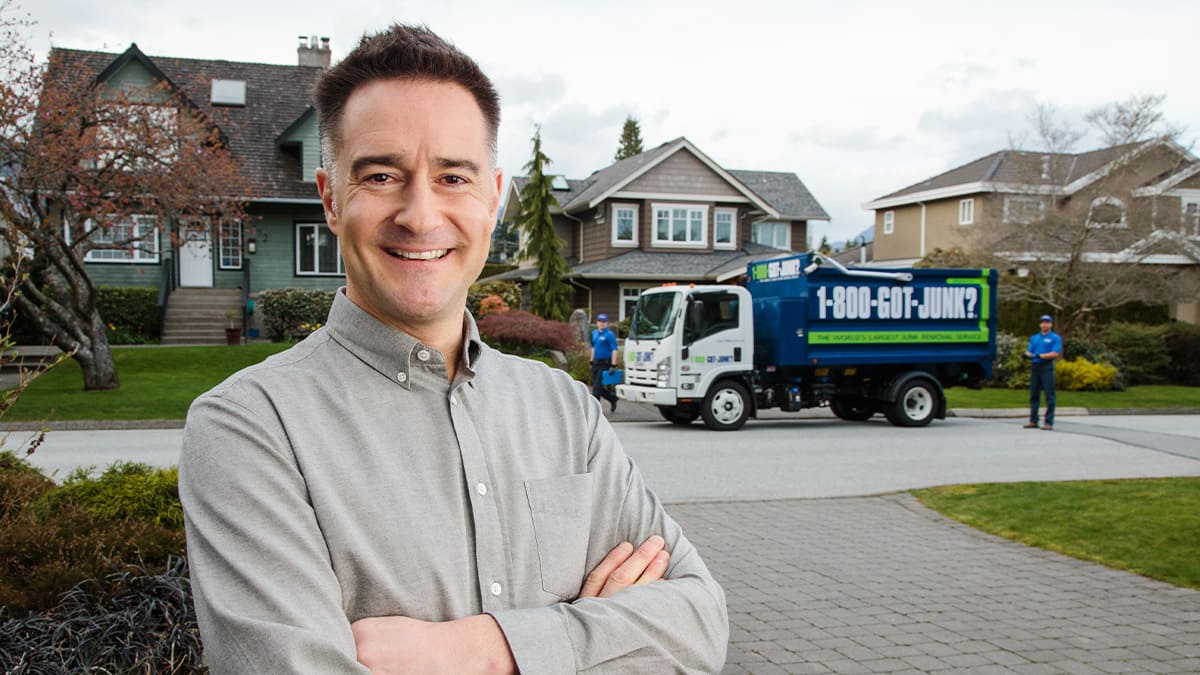
How I Built This podcast (2017): How Brian Scudamore built 1-800-GOT-JUNK?
Discover how an 18-year-old high school dropout turned a $700 pickup truck into the world’s largest junk removal service. In this feature based on NPR’s How I Built This podcast, founder Brian Scudamore shares how customer relief, relentless vision, and an iconic phone number built a global brand across Canada, the United States, and Australia.
Hack The Entrepreneur Podcast (2018): How to make things better with Brian Scudamore
How does a high school dropout turn a $700 beat-up truck into a junk removal empire? Discover the key strategies—including robust systems and a vivid vision—that took 1-800-GOT-JUNK? from a local hauling route to a global household name.