



How I Built This podcast (2017): How Brian Scudamore built 1-800-GOT-JUNK?




TL;DR
In this 2017 How I Built This interview, host Guy Raz discovers how Brian Scudamore built 1-800-GOT-JUNK? from a single $700 pickup truck into the world’s largest junk removal service. This blog post explores how culture, vision planning, and franchising drove his journey.
- Brian started in 1989 with $700, a pickup truck, and a dream of starting his own business.
- The Painted Picture mentality: Brian had a vision for becoming the world’s largest junk removal company, and rallied employees and Franchise Partners around this view of the future.
- People first culture: Bringing in friendly, happy, trustworthy people in order to create a culture focused on customer service.
Originally aired April 17, 2017 ; Re-aired on March 5, 2018
Published by: How I Built This on NPR
Host: Guy Raz
Guest: Brian Scudamore, Founder and CEO of 1-800-GOT-JUNK?.

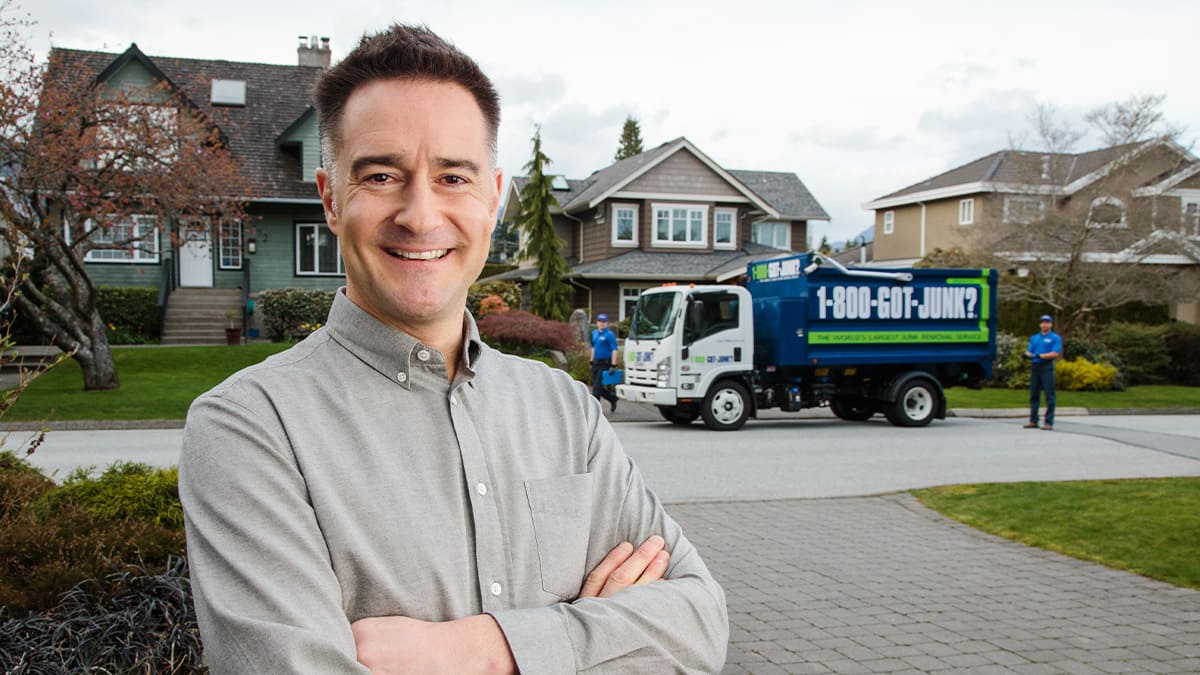
Brian Scudamore speaks to Guy Raz from NPR’s How I Built This about 1-800-GOT-JUNK?
Who would have suspected that the kid starting a competitive car-washing business in the seventh grade would one day grow up to run North America’s most 5-star-reviewed junk removal service? In this 2017 interview I had with Guy Raz, I reminisced on my business origins that eventually led me to creating 1-800-GOT-JUNK?.
At the time of our interview, 1-800-GOT-JUNK? was a $250 million system-wide enterprise across Canada, the US, and Australia (a footprint that has since scaled past $600 million as of 2026). I learned a lot of important lessons along the way, including: taking the ordinary business of junk removal and making it exceptional isn’t about luck. It’s big, bold visions working in tandem with a relentless pursuit to achieve the impossible.
From a $700 pickup truck to an industry pioneer
Back in 1989, I was an 18-year-old sitting in a McDonald's drive-thru in Vancouver, British Columbia, wondering how I was going to pay for college. While there, I saw a beat-up pickup truck filled with trash, with "Mark's Hauling" painted on the side.
Drawing on what I learned from my childhood car wash venture (where I first discovered marketing, pricing, profit, and some friendly neighborhood competition), I realized that junk removal was a simple service almost everyone needed. With $1,000 in savings, I bought a truck for $700, built wooden sideboards, painted 738-JUNK on the sides, and launched The Rubbish Boys.
Within two weeks, the business paid for the truck. By parking at busy intersections, I turned my truck into a mobile billboard. Soon, I realized I was learning far more on the street than in the classroom, so I dropped out of college to focus on building an empire.
Why cleaning house created a customer-first culture
Five years in, The Rubbish Boys reached $500,000 in revenue with five trucks. But beneath the surface, I had a major problem: nine of my eleven employees were "bad apples" who lacked professionalism and didn't share my passion for taking care of people.
I made the hardest leadership decision of my life and fired my entire staff in one sitting. Overnight, I went from running five trucks down to one, answering the phones, dispatching, and hauling junk all by myself.
As I told Guy Raz, that reset taught me a lesson I’ll never forget: 1-800-GOT-JUNK? isn't in the junk business—we are in the people business.
- It’s all about people: Our customers aren't just paying to have trash hauled away. They are buying peace of mind, ease, and emotional relief. From that moment on, I vowed to hire only friendly, clean-cut, and trustworthy people, establishing the foundation for our professional two-person teams.
The Painted Picture and hunting down 1-800-GOT-JUNK?
By 1997, our revenue reached $1 million. Sitting on the dock at my parents' summer cottage, I sat down with a paper and pen to draft what I called my "Painted Picture" - a clear, double-sided document describing our five-year destination. I envisioned clean trucks, uniformed drivers, upfront pricing, expansion into 30 cities, and even making an appearance on Oprah. I rallied our employees and Franchise Partners around this singular vision, and within 5 years, we completed almost everything I wrote down on that dock!
Dreaming big and pursuing a larger goal didn’t stop with the “Painted Picture”. To scale internationally, I knew we needed a name that people across North America would instantly remember. Inspired by the famous "Got Milk?" campaign, the phone number 1-800-GOT-JUNK? popped into my head. When AT&T told me the line was taken, I refused to give up. I placed 60 calls until I tracked down the owner: the Idaho Department of Transportation. After three persuasive phone calls, they agreed to transfer the number to us (for free!), securing our iconic brand.
Scaling through franchising and press momentum
With our brand and operating systems firmly in place, I partnered with Paul Guy in Toronto to launch our very first franchise. Shortly after, Fortune magazine ran a featured story on our company. Between Thursday and Sunday, we were flooded with 506 calls from aspiring entrepreneurs, leading to 53 franchise deals signed in a single year. I still couldn’t fully believe it, telling Guy Raz, “We ended up doing 53 franchise deals that year, which was just unheard of in the franchise space. Things just started to hockey stick and completely explode.”
As our revenue surged past $100 million, rapid growth brought new operational hurdles and the challenge of navigating the 2008 recession. Bringing on Erik Church as COO gave us the operational discipline to match my entrepreneurial vision. That partnership proved to me that when you trust your gut and surround yourself with great leaders, your business can weather any storm.
What it takes to make space for possibility
At 1-800-GOT-JUNK?, I have always believed that clearing away unwanted items is about much more than physical labor. Whether we are helping a homeowner clear out a garage or assisting a business with commercial debris, every cleanout gives people back their time, space, and peace of mind. When the physical clutter disappears, something new can begin.
Guy Raz and I even spoke about some of the rare and weird items 1-800-GOT-JUNK? has been able to haul away to make room for possibility:
- A truckload of escargot shells (including jumping into the truck to crush them down!)
- A bible belonging to John Wayne
- An ATM machine with $26,000 still inside
Read the full interview
It was great to speak to Guy Raz and tell him all about my experience founding 1-800-GOT-JUNK?, including all the ups and downs.
Interested in reading the full conversation between Guy Raz and me? Expand below to learn even more about how I pioneered the junk removal industry.
Read the full transcript below
[00:00:21:01 - 00:00:37:25] Brian Scudamore: I was learning much more running a business on the streets versus studying in school. I remember sitting down with my father, who is a liver transplant surgeon. I remember having to sit down with him and just say, Dad, I have some good news for you. I presented it as good news because to me, it was good news.
[00:00:37:25 - 00:00:49:29] Brian Scudamore: I thought if I could get him excited, he might agree with me. I told him I was leaving school. He said, you are dropping out of school to become a junk man.
[00:00:50:02 - 00:01:03:27] Guy Raz: From NPR, it’s How I Built This. A show about innovators, entrepreneurs, idealists, and the stories behind the movements they built.
[00:01:04:00 - 00:01:22:27] Guy Raz: I’m Guy Raz, and on today's show, how an old pickup truck and a simple idea inspired Brian Scudamore to build the largest junk hauling service in the world.
[00:01:22:29 - 00:01:47:11] Guy Raz: By this point, if you have been listening to the show, you know all about the inspiring people who had an idea and then ran with it. Whether it was Sara Blakely with Spanx or Tony Hsieh with Zappos, they had a vision and they pursued it. But almost all of them had to go through a complicated process to get from idea to implementation, which is why today's story is such a contrast.
[00:01:47:11 - 00:02:15:08] Guy Raz: While junk hauling may not sound sexy, Brian Scudamore's idea was comparatively elegant and simple. He didn’t need a whole lot of money to start. He didn’t need any outside investors, and he didn’t need to hire anyone, at least at first. To be clear, Brian did not dream of a life hauling away other people's trash. He did dream of starting a business as a kid in Vancouver, Canada.
[00:02:15:28 - 00:02:38:18] Brian Scudamore: Let’s see, seventh grade. I remember in Vancouver starting a car wash one summer. I saw my neighbor across the street, Eric, had started this car wash and he was charging three bucks a car, and I thought what a great way to make money. I saw him washing cars and making money, so I went and took a piece of plywood and made my own sign, and I decided to charge two bucks.
[00:02:38:18 - 00:02:41:14] Guy Raz: Wow. You undercut your neighbor across the street.
[00:02:41:14 - 00:03:00:25] Brian Scudamore: I undercut my neighbor by a full dollar and I thought this is cool. There I was learning about a price war, and it was awesome because literally cars would show up on my side of the street, I would wash their cars, he would get more cars, and we would start competing on price. The funny part is I got down to $0.65.
[00:03:00:26 - 00:03:06:16] Guy Raz: You were a ruthless, cruel, heartless businessman in seventh grade.
[00:03:06:22 - 00:03:23:27] Brian Scudamore: It is funny. We both made money, and we both had fun. We would do this several times throughout the summer, and we would step up the marketing. I would get some friends, a couple of girls that were in my class, and I would get them to go hold signs at the busier street a block away to flag people over.
[00:03:23:27 - 00:03:31:14] Brian Scudamore: You start to learn about pricing and profit. I was making so much money that I could not even believe it.
[00:03:31:15 - 00:03:35:28] Guy Raz: Were you a genius student? Were you super good at school?
[00:03:36:00 - 00:03:55:06] Brian Scudamore: Whatever the polar opposite of a genius student would be, that would be who I was. What would happen is things like reading. That was one area I got stuck. I am so ADD that I couldn’t focus on the words. My mind would go to other things, and I would have a hard time with that. I learned to read, but I didn’t learn to understand.
[00:03:55:06 - 00:04:21:08] Brian Scudamore: That became a challenge through school and held me back from learning through books. I failed many years throughout high school. I ultimately was one course short from finishing high school. Twelfth grade, didn’t finish, didn’t graduate. Then I saw all my friends get accepted into colleges, and I said I don’t want to be left out.
[00:04:21:09 - 00:04:37:00] Brian Scudamore: I went to one of the universities and said I don’t have my high school graduation, but I am smart enough, and I can do this. I wrote them letters, and I spent time in the admissions office. Finally, they said okay, we are going to let you in.
[00:04:37:02 - 00:04:44:09] Guy Raz: So you were 18 at the time? Were you working? Were your parents helping you out? How did you even have money to go to school?
[00:04:44:11 - 00:05:04:02] Brian Scudamore: When I approached my parents and asked for some money for school, they said, are you kidding me? You didn’t even finish high school. Why are we going to fund your college education? It turns out that they were probably smart. What it taught me is I had to get out there and fund my own education. And what I did, I was in a McDonald's drive-thru in Vancouver.
[00:05:04:02 - 00:05:21:02] Brian Scudamore: I saw this beat-up old pickup truck with plywood sides and junk filled up in the truck, and it had a sign on the box that said Mark's Hauling. I was having trouble finding a job. I didn’t know what I was going to do to pay for college, and when I saw that truck, I immediately connected with that as something I could do.
[00:05:21:05 - 00:05:36:16] Brian Scudamore: I looked at the truck and I thought about how I started those car washes as a kid. You can see how easy that was to get out there, advertise, and wash people's cars. To me, this was: buy a truck and haul junk.
[00:05:36:19 - 00:05:40:23] Guy Raz: Wow. Did you rush out and go look for a truck?
[00:05:40:26 - 00:06:00:29] Brian Scudamore: Yeah, I grabbed the classified section of the paper and started looking for trucks. I found one that I… I don’t know if I fell in love with it, but I certainly could afford its price tag of $700. I had $1,000 of my own money, and I spent $700 on a beat-up truck of my own. It was this little blue Ford F-100.
[00:06:00:29 - 00:06:18:13] Brian Scudamore: I got my girlfriend's father at the time to help me build the plywood sides on there, and off I went. I spray-painted 738-JUNK, which was the phone number I was able to get from the phone company, and my company was called The Rubbish Boys.
[00:06:18:18 - 00:06:40:03] Guy Raz: We all hear about light bulb moments, but the reality is there are not very many light bulb moments. Usually, it is a long process of iterations, trying things, and failing. This was a light bulb moment that just happened to pass by you at that moment. If you weren’t at that McDonald's, you would not have seen that truck, and you may not have thought of that idea.
[00:06:40:04 - 00:06:59:01] Brian Scudamore: Absolutely true. I would have found something else, though. It is in my DNA. It’s how I think. Sure, I found a junk truck. I am not passionate about junk, and I never will be. I love customer experience, and I love building businesses. I love building things. If I did not see the junk truck, I could have seen a completely different opportunity.
[00:06:59:01 - 00:07:03:19] Brian Scudamore: I could have seen a carpet cleaning business and said that is what I am going after.
[00:07:03:20 - 00:07:15:06] Guy Raz: You go out and you get the truck. How did you even know what to do at that point? How did you even know what to charge people or how to find customers?
[00:07:15:09 - 00:07:32:22] Brian Scudamore: I just started looking around in the classifieds. I started looking and seeing other people doing what they called rubbish removal, and they said they charged by the truckload or the portion of a load. I would call them up and find out how much they charged. You call someone up and you say I’ve got a couch.
[00:07:32:22 - 00:07:45:13] Brian Scudamore: They’re gonna tell you it’s going to be a hundred bucks, 150 bucks, dumping fees, whatever it would be. I would pay attention and make notes. Then I decided to start my charge rate at $80 a truckload.
[00:07:45:13 - 00:07:46:14] Guy Raz: Which is pretty cheap.
[00:07:46:15 - 00:08:00:21] Brian Scudamore: It was pretty cheap. It was probably too cheap because in the beginning I wasn’t really making money. I underpriced myself thinking that when you go out as a business, especially as an 18-year-old kid starting a company, I had to be the cheapest.
[00:08:00:23 - 00:08:07:02] Guy Raz: How were you getting the word out? How did people know that you were even available to do this?
[00:08:07:02 - 00:08:30:10] Brian Scudamore: I had painted my phone number on the side of my truck, 738-JUNK. It was just emblazoned on there. It was bigger than anything else you could possibly see, and I would park my truck at a high-traffic intersection, so people would see this and they’d call. I really quickly figured out that people would say they saw my 738-JUNK truck parked at Arbutus and 12th.
[00:08:30:10 - 00:08:35:18] Brian Scudamore: How much do you guys charge? I learned very quickly that that was my mobile billboard.
[00:08:35:19 - 00:08:43:08] Guy Raz: What would you do? You would go to a house and you would yourself, with no help, clear all the stuff that they wanted removed?
[00:08:43:08 - 00:09:09:19] Brian Scudamore: I would, I would just go into their attic, their basement, wherever the junk was in their garage, and haul it away. I realized there are a lot of things, like refrigerators and deep freezers, that were too heavy for just myself. I needed employees, and I recruited my best friend, David Snyderman. He became too connected to the junk. We’re still best friends today, but it was pretty funny because he would just look through the junk and say, look at this, check this out.
[00:09:09:21 - 00:09:15:21] Brian Scudamore: You know the history behind this, and he would keep things. And I’m like, this is not going to work out, we need to work here.
[00:09:15:22 - 00:09:28:21] Guy Raz: How did you figure out what you do with the junk? You have to pay a fee to move it to a dump or a landfill site. Where did you find those places?
[00:09:28:22 - 00:09:46:23] Brian Scudamore: I called up the city municipalities and asked where to take a load of junk if I’ve got some. They gave me the addresses of all the different places, and I tried them all out. Some were closer than others, and some were cheaper but farther away. I experimented a bit, but it was pretty easy stuff.
[00:09:46:24 - 00:09:57:10] Brian Scudamore: It really was a business of pick up someone's junk, see the smile on their face, take their stuff off to the dump or to be recycled, and repeat.
[00:09:57:12 - 00:10:04:13] Guy Raz: So simple. How long did it take before you paid off the cost of the truck?
[00:10:04:15 - 00:10:15:11] Brian Scudamore: Within two weeks, I had made enough money to pay for the business. I adjusted my prices quickly, I worked hard, and I made $1,700 in net profit that summer.
[00:10:15:12 - 00:10:17:04] Guy Raz: This is 1989, roughly.
[00:10:17:05 - 00:10:40:03] Brian Scudamore: 1989. All I remember was that $1,700 was enough to pay for my school with some left over. I would do this every summer until I finally made the bold decision to drop out. I was learning much more running the business on the streets versus studying in school. I remember sitting down with my father, who is a liver transplant surgeon.
[00:10:40:04 - 00:10:57:06] Brian Scudamore: This guy has done more school than anybody I know. Very successful, very smart man. I remember having to sit down with him and just say, Dad, I have some good news for you. I presented it as good news because to me it was good news. I thought if I could get him excited, he might agree with me.
[00:10:57:06 - 00:11:10:15] Brian Scudamore: I told him I was leaving school. He said, you are dropping out of school to become a junk man. He was just destroyed. His oldest son was leaving school to become a junk man.
[00:11:10:17 - 00:11:13:01] Guy Raz: To haul trash? I am a liver transplant surgeon!
[00:11:13:04 - 00:11:36:24] Brian Scudamore: On the glamor spectrum, it could not be closer to the bottom. I just said, no, Dad, I am learning so much more. He said, Brian, you have a year left in your university education, just go finish it. I said, Dad, my business opportunity might not be there forever. I said, I guarantee the University of British Columbia would be there for years and years to come if I ever choose to go back.
[00:11:36:26 - 00:11:40:09] Brian Scudamore: We agreed to disagree, and I dropped out.
[00:11:40:17 - 00:11:49:14] Guy Raz: At this point, this became your full-time gig, right? Was it you and a partner, or was it just you alone?
[00:11:49:14 - 00:12:13:20] Brian Scudamore: When I dropped out, I ended up having a guy who went to school with me, John Riedel. John and I went from one truck to three trucks right after I quit school. The whole thinking there was these mobile billboards work. If I can add two or three mobile billboards around town, we are going to get that much busier, things are going to grow, and we are going to have this little empire.
[00:12:13:21 - 00:12:17:27] Guy Raz: You weren’t even paying for advertising because you just had this on the side of your trucks.
[00:12:17:27 - 00:12:47:08] Brian Scudamore: We weren’t paying for advertising. My girlfriend at the time said, “Why don’t you call up the local press, call the newspaper, and tell them your story?” I said, “What story?” She said, “Well that you guys have created your own job. It is a tight summer labor market, nobody can find work, and you guys created your own job.” I said okay. I picked up the phone and I called up the Vancouver Province, our biggest newspaper at the time. It must have been a slow news day because I said I’ve a great story for you.
[00:12:47:08 - 00:12:57:17] Brian Scudamore: They asked what it was. I told them, and they sent out a reporter and a photographer. The next day, boom, we were on the front page of the paper. We got a front-page ad for free.
[00:12:57:17 - 00:12:59:02] Guy Raz: With your phone number on it.
[00:12:59:03 - 00:13:15:01] Brian Scudamore: Yes. I remember the photographer saying “you guys are going to be busy tomorrow”. Sure enough, he was right. We had bus drivers driving down the streets waving their newspapers with our picture on it out of the window saying, that’s you! It was pretty fun.
[00:13:15:02 - 00:13:21:23] Guy Raz: By the way, did you ever have to get a bank loan or outside money to fund the company?
[00:13:21:26 - 00:13:26:21] Brian Scudamore: I didn’t. I was lucky. I built a business out of cash flow.
[00:13:26:21 - 00:13:31:18] Guy Raz: Your costs were low, right? It was you and your partner, and you were just hauling the stuff out.
[00:13:31:20 - 00:13:46:20] Brian Scudamore: Yeah. I ultimately bought my partner out after about a year. What I did is I just invested everything back into the business to grow it. I never expanded beyond my means, at least not in the early stages of the business.
[00:13:46:23 - 00:13:50:09] Guy Raz: What was the kind of stuff that you would haul out of people's homes?
[00:13:50:15 - 00:14:11:22] Brian Scudamore: We would haul away old furniture, appliances. We’re very much a keep-up-with-the-Joneses type world, and I think unfortunately, people renovate too much and always want new furniture, the latest and greatest, and TVs. We haul away their old stuff. We try and recycle as much as we possibly can, but furniture, appliances, and yard debris when someone cleans up the yard.
[00:14:11:22 - 00:14:31:27] Brian Scudamore: It was a simple model, but it was fun because you would find weird things. I remember there was a woman who had soup cans. She had a whole wall of Campbell's soup cans. It looked like a real live art piece. I remember looking at this and asking what she was doing.
[00:14:31:28 - 00:14:51:15] Brian Scudamore: She said she was saving up for the next big war and just wanted to have all this food stocked away. Finally, her kids told her that even if there was a war, she could not eat that stuff because it was 50 years old. We ended up cleaning out a whole Andy Warhol-ish wall of Campbell's soup cans.
[00:14:51:18 - 00:15:04:10] Guy Raz: What were some of the challenges that you faced in the early days? Were there any regulations that you had to get around or competitors that tried to shut you down?
[00:15:04:12 - 00:15:24:03] Brian Scudamore: The biggest challenge I faced in the early days happened five years in. We were at about half a million in revenue, and I realized I wasn’t having fun any longer. I was avoiding spending time with my employees, and I just had the wrong people. I realized that one bad apple spoils a whole bunch, and nine of my eleven staff were bad apples.
[00:15:24:03 - 00:15:36:17] Brian Scudamore: So, I just decided to clean house. I got rid of everybody, and I did it in one sitting. I took responsibility as their leader and said “Hey, I’ve let you guys down and I’m sorry, but this isn’t going to work out.
[00:15:36:19 - 00:15:38:15] Guy Raz: What was the problem with them?
[00:15:38:16 - 00:15:58:20] Brian Scudamore: They weren’t clean-cut. They weren’t professional. They didn’t see what I saw. It was as simple as they didn’t care about the customer. They were hauling away the junk and taking it to the dump. They didn’t have the sense to allow the customer to have that sense of relief that their junk is gone and that they have their space back.
[00:15:58:22 - 00:16:05:23] Brian Scudamore: Let's chat them up a little bit and make them happy. They were not aligned with my vision.
[00:16:05:25 - 00:16:16:23] Guy Raz: How were you able to run the business the next day? All of a sudden you fired your entire team, and presumably, you had jobs to do the next day and weeks.
[00:16:16:23 - 00:16:37:26] Brian Scudamore: It was hard. I went from five trucks down to the ability to only run one at a time. I had my truck, I had my cell phone, I was the call center. I did the booking, the dispatch, and the junk hauling. I did everything. But what it taught me was you build a company that is all about people, find the right people, and treat people right.
[00:16:37:26 - 00:16:52:02] Brian Scudamore: So I vowed from that day to never make the same mistake. Of course, I’ve made hiring mistakes, but relatively few. I really focused on finding people that I wanted to work with.
[00:16:52:04 - 00:17:13:15] Guy Raz: When we come back, how Brian Scudamore pleaded with the state of Idaho to get the number 1-800-GOT-JUNK?. I am Guy Raz, and you are listening to How I Built This from NPR.
[00:18:23:18 - 00:18:51:16] Guy Raz: Welcome back to How I Built This from NPR. I’m Guy Raz. It is the mid-1990s. Brian has fired all of his employees, and after a rough few months, he begins to rebuild the team. At this point, his company is still a small business running in just one city. When did you decide that this thing could be bigger than just a junk hauling company in Vancouver?
[00:18:52:21 - 00:19:20:06] Brian Scudamore: At this point in 1997, we were actually at $1 million in revenue. I joined something called YEO, the Young Entrepreneurs' Organization, and I found myself surrounded by people who had some pretty cool businesses, tech companies, growing ad agencies, and stuff that seemed a little sexier than junk removal. I found myself feeling sad because I was comparing myself to others, and I didn’t feel good enough.
[00:19:20:07 - 00:19:38:05] Brian Scudamore: So what I ended up doing was I went to my parents' summer cottage. They had this little cottage, and I sat out on their dock and I said this is not who I am. I am an optimist. I pulled out a pen and a sheet of paper and I said, what if I could just dream up possibility?
[00:19:38:06 - 00:20:03:19] Brian Scudamore: What could this business look, feel, and act like five years down the road? I said we’ll be in the top 30 metros in North America. Even though we were only in one, we would be the FedEx of junk removal. Clean, shiny trucks, and friendly uniformed drivers. I just started to put these big, hairy, audacious goals down on paper that we would be like the McDonald's of junk. Just what Ray Kroc did, where he got all these owners on board.
[00:20:03:19 - 00:20:20:16] Brian Scudamore: We would do the same thing with the junk removal business. I took Paul Guy, who was the operations manager of mine in Vancouver, and I said you are going back and forth to Toronto every couple of weeks to see your girlfriend. Why don’t you move there? Why don’t you take a truck? Why don’t you start the first franchise?
[00:20:21:09 - 00:20:26:16] Guy Raz: How did you even know how to structure a franchise? How did you figure out how that would work?
[00:20:26:18 - 00:20:47:10] Brian Scudamore: I looked at other franchises. I looked at Subway, I looked at businesses and thought about what kind of royalty they were charging and what the business model was. I got out and talked to a bunch of experts. Again, being a guy that does not learn from school, I just picked up the phone and I called people. I approached a bunch of experts and said this is what I am thinking of doing.
[00:20:47:10 - 00:21:06:22] Brian Scudamore: What do you think? They gave me some feedback and advice on how to structure fees and royalties. I brought on a franchise lawyer who is still with us today, and I remember that he helped to give me a lot of the advice and the systems. He believed in us and knew that we would build something much bigger than where it was at that time.
[00:21:06:23 - 00:21:12:09] Guy Raz: You get your first franchisee in Toronto, and how did that go?
[00:21:12:11 - 00:21:31:10] Brian Scudamore: It was funny because I got a phone call from Paul Guy. It took him a week to get to Toronto. He made a few stops, and he called me up within the first couple of weeks. He said this is not going to work here. I asked what he was talking about. He said he found out that the city will haul away anything for free.
[00:21:31:12 - 00:21:51:04] Brian Scudamore: He said you can just put it out on the curbside. They’ve got special garbage collection days. They will take fridges, stoves, couches, you name it. It doesn’t matter. I said, Paul, you have driven across the country. Trust me. Please, just try it. So he did. He started to get business. He started to hear from customers that someone was doing a renovation.
[00:21:51:04 - 00:22:10:25] Brian Scudamore: Maybe they did not get a city permit, so they did not want to call the city to haul away the junk, or maybe the junk was in their garage or their basement. The city workers wouldn’t come collect it from anywhere but the curbside. Paul started to realize wow, okay, this is going to work. He did $1 million in revenue in his first full calendar year.
[00:22:11:24 - 00:22:22:04] Guy Raz: Wow. At that point you are thinking we have got to expand. We have got to move beyond Vancouver and Toronto. What was the next step? What was the next place to go?
[00:22:22:11 - 00:22:24:21] Brian Scudamore: The next place to go was in the United States.
[00:22:24:23 - 00:22:33:21] Guy Raz: Just to clarify, at the beginning, your company was called The Rubbish Boys. When did you come up with the new name? When did you become 1-800-GOT-JUNK? finally?
[00:22:33:22 - 00:22:55:08] Brian Scudamore: Paul was in my office. We were working, and I said if we’re going to go for this franchise model and build something across North America, I knew the word rubbish was going to be a problem. It was more of a Canadian and British term. The other problem we had was people would either think of the company as being The Rubbish Boys, and some people thought of us as 738-JUNK.
[00:22:55:08 - 00:23:21:23] Brian Scudamore: Effectively, they saw us as two companies. I remember sitting down with Paul, and we were brainstorming. I said, what if we did a 1-800 number, something like 1-800-FLOWERS, something that was more descriptive. We started brainstorming, and the whole Got Milk? campaign that was running at the time inspired me to 1-800-GOT-JUNK?. Our phone number had a question mark in it, and it would ask the question, got junk?
[00:23:21:25 - 00:23:28:20] Brian Scudamore: Well, of course I do. Then give us a call. So I tried to find who owned 1-800-GOT-JUNK?.
[00:23:28:24 - 00:23:30:27] Guy Raz: Somebody owned it? It wasn’t available?
[00:23:30:28 - 00:23:48:07] Brian Scudamore: It wasn’t available! The phone company said they couldn’t get me the number, so I had to dig around. I ended up making about 60 phone calls. I had friends and family in the United States calling the number. It was only working in one state, and that was the state of Idaho.
[00:23:48:08 - 00:23:50:03] Guy Raz: Who in Idaho had this number?
[00:23:50:03 - 00:24:12:24] Brian Scudamore: The Department of Transportation in Idaho owned this 1-800-GOT-JUNK? phone number. They didn’t know it spelled “got junk”, but they were using this phone number. I thought okay I need this number. I called into their office, called up their main switchboard, asked for the phone room, and I got this guy Michael. Michael ends up talking to me, and he asks why I want this number.
[00:24:12:24 - 00:24:27:26] Brian Scudamore: I just said it is a business idea, and I really want it. He said they weren’t really using it that much. It took three phone calls to him before he finally said okay, here’s the AT&T forms, fax them over to me, the number is yours. I signed, and we had a deal.
[00:24:27:27 - 00:24:32:04] Guy Raz: Wait, he just gave you the phone number for free?
[00:24:32:07 - 00:24:36:29] Brian Scudamore: I think he wanted to get rid of me. I think he was sick and tired of me calling.
[00:24:36:29 - 00:24:41:21] Guy Raz: You really needed that phone number. That was an incredibly lucky break.
[00:24:41:24 - 00:25:01:03] Brian Scudamore: It was a lucky break, but you make your own luck. I could have given up after call number 54 or 55. I just kept going. I have heard so many stories of Colonel Sanders knocking on 183 doors, and then on the 184th, the guy says he loves the recipe. You just can’t give up.
[00:25:01:05 - 00:25:05:00] Guy Raz: How did you expand into the US?
[00:25:05:06 - 00:25:28:05] Brian Scudamore: We expanded through franchising. We found a lawyer, started networking through our Canadian lawyer, found a great attorney in the US, and we created our franchise documentation. It got approved by the FTC, and they said okay, off you go. Then we just really started to aggressively go after the US press. The big turning point for us, the big media hit in the US, was Fortune magazine.
[00:25:28:05 - 00:25:32:15] Guy Raz: Why did you think it was so important to get press coverage?
[00:25:32:15 - 00:25:53:17] Brian Scudamore: I saw that when we were this little local business as The Rubbish Boys, and we would get stories in the newspaper, people would repeat our stories back to us. They would say wow, you dropped out of college and you’re building this business, and what a great thing that you’re doing. It’s an awesome story. We just started telling the story.
[00:25:53:17 - 00:26:01:20] Guy Raz: You get this article, and then what? As a result, people were calling you saying they wanted to buy a franchise?
[00:26:01:22 - 00:26:27:29] Brian Scudamore: We ended up getting an article in Fortune magazine. They saw one of our trucks in San Francisco. Adam Lashinsky, the writer, called and said he saw this truck, heard about you guys. It seems like a crazy business. You are building a brand in junk removal. Who does that? The story came out, hit the ground on a Thursday, and we ended up getting 506 phone calls from Thursday to Sunday.
[00:26:27:29 - 00:26:30:27] Brian Scudamore: That week we were flooded with leads.
[00:26:30:29 - 00:26:34:18] Guy Raz: These were people who were interested in buying franchises.
[00:26:34:20 - 00:26:55:25] Brian Scudamore: Yes, 506 calls. Imagine listening to that, trying to write them all down, and calling everyone back. We were overwhelmed. I got on the voicemail and I said due to an overwhelming response from Fortune magazine, we are unable to call people back. If you would like to learn more about our opportunity, please call in to this conference call at this time.
[00:26:55:25 - 00:27:13:27] Brian Scudamore: What we did is we would have 100 people show up on a conference call, and we would do a roll call of where they were from. We would go through one by one with all these different people. Everyone realized they had all this competition and wanted to get in. It drove the process quickly.
[00:27:13:28 - 00:27:25:06] Brian Scudamore: We ended up doing 53 franchise deals that year, which was just unheard of in the franchise space. Things just started to hockey stick and completely explode.
[00:27:25:09 - 00:27:39:13] Guy Raz: You had to adjust from running a small business to a pretty big company almost overnight, right? All of a sudden you had all these new franchise partners. That must have been a huge challenge.
[00:27:39:15 - 00:27:49:26] Brian Scudamore: In the beginning, it was great excitement. Things were just building all this great momentum. We raced pretty quickly to $100 million in revenue.
[00:27:49:26 - 00:27:51:26] Guy Raz: What year did you hit 100 million?
[00:27:51:26 - 00:28:17:16] Brian Scudamore: 2006. It was exciting, and there was this energy and this momentum. What was interesting about that time in 2006 is I realized I had my president of my company, my COO, Cameron Herold. I was the best man in his wedding, a great friend. We are still friends today. We grew together from 2 million to 106 million in a very short period of time.
[00:28:17:17 - 00:28:25:24] Brian Scudamore: What started to break was that you had two ADD fire-ready-aim types at the top of the company.
[00:28:25:24 - 00:28:27:08] Guy Raz: That’s you and Cameron.
[00:28:27:10 - 00:28:32:04] Brian Scudamore: Yes. That just doesn’t work. We started to make poor decisions together.
[00:28:32:05 - 00:28:33:24] Guy Raz: Like what would you do?
[00:28:33:25 - 00:28:54:19] Brian Scudamore: We would overspend in areas where we would take some risks, and we wouldn’t really think through with any rigor and discipline or how it would affect our franchise partners. We had a truck rollout program where we said everybody needs more trucks, just get more trucks out there. We put it in the franchise agreement that our franchise partners had to increase their fleets by a certain period of time.
[00:28:54:20 - 00:29:15:21] Brian Scudamore: There was some rebellion and I don’t blame them. It was too aggressive. I realized that we were making mistakes. You can’t have the two ADD types at the top. I needed to find a new leader. Having to tell your best friend that this is no longer gonna work out is a tough, painful thing to go through for both of us.
[00:29:15:22 - 00:29:22:14] Brian Scudamore: We’ve healed and moved on. Cameron would tell anyone today that Brian made the right decision.
[00:29:22:16 - 00:29:27:21] Guy Raz: Obviously, I am assuming you found someone else to run the operations side of the company.
[00:29:27:22 - 00:29:49:19] Brian Scudamore: I did. One of the biggest mistakes I made was the second person I brought in as the second president. I brought in an ex-Starbucks COO. This person had been a president of one of the US divisions of Starbucks and had done amazing things for that business, with 30,000 employees under this person's report.
[00:29:49:19 - 00:29:54:01] Guy Raz: You are thinking this person is just a slam dunk. They are going to do a great job for me.
[00:29:54:02 - 00:30:11:15] Brian Scudamore: Oh yeah, and just thought jackpot. This is just unbelievable. We almost bankrupted the company. After 20 years of growth, we went from 119 million in revenue, which is what we had hit at that peak at that time, and we dropped down to the 80s.
[00:30:11:16 - 00:30:12:20] Guy Raz: What happened?
[00:30:12:22 - 00:30:36:03] Brian Scudamore: The recession hit, which didn’t help, but I don’t buy for a second that that was really the issue because what really happened was my president's leadership and my vision weren’t aligned. I needed an executor who could translate my vision and say here is the vision, let's translate it into a plan, here’s all the steps, let's make these things happen.
[00:30:36:03 - 00:30:43:16] Brian Scudamore: I needed somebody that believed in me and where I could also believe in them. I got that person out of the business.
[00:30:43:17 - 00:30:45:15] Guy Raz: How close was the company to falling apart?
[00:30:45:16 - 00:31:07:03] Brian Scudamore: We couldn’t have been closer. I would have given us another 90 days if we had continued down that path. We had overspent so drastically on big bets that didn’t pay off, and I had to hunker down. I had to lay off 52 people. I needed to elevate another team, the middle-level managers, up. I said I know you might not agree with my decision.
[00:31:07:03 - 00:31:36:18] Brian Scudamore: You probably think I am crazy, but I need your help. It was the hardest period in my professional life. While my middle-level management team, who was elevated, continued to run the business, I scoured the country for the right leader. I interviewed 75 potential presidents/COOs. I said I need to find someone whose strengths and talents would take all the things I am bad at and make them happen.
[00:31:36:18 - 00:32:02:27] Brian Scudamore: I painted this little vision describing exactly who I was looking for. I got it out to my networks, and three different people, totally unrelated, said the person you describe is Erik Church, because you have only described one person on the planet. I reached out, and Erik and I got connected. He was very happily employed. He was president of a big travel tourism company, and when the magic happened, it was just okay.
[00:32:03:00 - 00:32:26:08] Brian Scudamore: We can see building this thing together. We can see how we would each contribute strengths to the recipe. We entered this partnership, and it has been almost six years. Together we can debate, discuss, and work together. I’m the culture guy, I’m the vision guy. He is the implementor, the rigor. He is the team-building guy.
[00:32:26:08 - 00:32:28:24] Brian Scudamore: It’s unbelievable.
[00:32:28:27 - 00:32:36:07] Guy Raz: At what point did you stabilize? At what point were you able to say we have totally passed this crisis?
[00:32:36:07 - 00:32:55:09] Brian Scudamore: When Erik Church came in, the first thing he did is he had the goals that I had put in place and he lowered them. He said, listen, Brian, it’s not that I don’t believe in you and that I don’t believe in the goals, but we’re going to lower the bar because we’re going to teach people what it feels like to win again.
[00:32:55:11 - 00:33:12:13] Brian Scudamore: We are going to make sure we win. We are going to put the bar low enough that there is no way in the world we’re not going to win. When people start to feel and taste that winning feeling again, the confidence will build. The team will come back. He thought about it in a very strategic, planful way.
[00:33:12:13 - 00:33:23:25] Brian Scudamore: We made money in the first year of this new business, really taking 1-800-GOT-JUNK? and restructuring, hunkering down. We made money.
[00:33:23:27 - 00:33:26:13] Guy Raz: How many cities do you guys operate in now?
[00:33:26:14 - 00:33:33:21] Brian Scudamore: We are in every major metro in the United States, Canada, and Australia. You name the city, we’re there.
[00:33:33:26 - 00:33:46:20] Guy Raz: Wow. I am just curious. I talk to obviously lots of entrepreneurs on the show. Some of them go the franchising route, and then some of them decide not to do that. Why did you decide to do that?
[00:33:46:22 - 00:34:07:24] Brian Scudamore: I think the answer ties to the person I am and what motivates me. I have never been a money-motivated person. I probably would have made more money in the long term if I had done a corporate model, an IPO, and raised money. What motivates me more than anything is taking someone who has the American dream, build their own business, but they do not know how.
[00:34:07:27 - 00:34:27:18] Brian Scudamore: Giving them a recipe, giving them the cheerleading, the support, and the team of other franchise owners who can come together. The franchise model to me was that you have skin in the game, this is your business. We could build something much bigger together versus what we could have ever done alone. That feels good.
[00:34:27:20 - 00:34:44:05] Guy Raz: If you were to go back to the 18-year-old Brian at that McDonald's drive-thru, and you were just there and you said, dude, I know what is going to happen to you over the course of your life, listen to me. What would you say to him?
[00:34:44:07 - 00:35:07:27] Brian Scudamore: I would say, Brian, listen to your gut. Make the right decisions that you know with all your heart are the decisions that need to be made. Do not be afraid to make them, and trust that everything is going to work out. I have learned that you have storms in life, and just like any storm in real life, they do not last forever.
[00:35:07:29 - 00:35:18:24] Guy Raz: I have just one more question for you, Brian. What is the weirdest thing that you ever hauled off?
[00:35:18:26 - 00:35:37:23] Brian Scudamore: The weirdest thing I probably hauled off was an entire truckload of escargot shells. Some company who imported escargot went bankrupt. We loaded the truck, and it was very light because these shells were all air. This guy says to me, come on, you can fit more in than that.
[00:35:37:23 - 00:35:56:10] Brian Scudamore: I said we have a full truckload, sir, you can see the truck is full. He came up with this idea, and the customer is always right, so we did it. He said go up into the second story of the office, jump into the back of your truck, collapse all those shells, and fit in another load. So we did it.
[00:35:56:11 - 00:36:06:09] Brian Scudamore: It was kind of fun screaming woo-hoo jumping out the window into the back of the truck. We got another load in, and we had fun. He was happy.
[00:36:06:11 - 00:36:41:20] Guy Raz: Brian Scudamore, founder of 1-800-GOT-JUNK?. By the way, last year, the company and their franchise partners made close to a quarter of a billion dollars in revenue hauling off people's junk. Sometimes that junk is kind of interesting. They told us that in recent years they’ve come across a Bible that belonged to John Wayne, an old airport X-ray scanner, and an ATM machine that still had $26,000 in cash inside.
[00:40:27:19 - 00:40:48:07] Guy Raz: Thanks so much for listening to the show this week. If you want to find out more about who was on it, go to How I Built This, and you can also follow us on Twitter. That is at How I Built This.
Frequently asked questions
How did 1-800-GOT-JUNK? get its name?
Inspired by the "Got Milk?" campaign, founder Brian Scudamore conceptualized 1-800-GOT-JUNK? in 1997. After making 60 calls, he tracked the number to the Idaho Department of Transportation and persuaded them to transfer the line.
How does 1-800-GOT-JUNK? serve residential and commercial customers?
Our friendly, professional two-person teams handle all the heavy lifting, sweeping up afterward, and diverting items to recycling depots, charities, and diversion sites whenever possible.
What is the Painted Picture vision created by Brian Scudamore?
The Painted Picture is a detailed document written by Brian Scudamore on a dock in 1997. It envisioned growing 1-800-GOT-JUNK? into 30 major metros with clean trucks, uniformed drivers, and upfront pricing.
Similar articles

Chatter That Matters podcast (2026): Brian Scudamore on the importance of being willing to fail
When Brian Scudamore and Tony Chapman spoke on the Chatter That Matters podcast, they unpacked what it really takes to turn a $700 pickup truck into a $700M global brand. In this article, Brian shares his personal journey of embracing a "WTF" (Willing to Fail) attitude, building a customer-first culture, securing the 1-800-GOT-JUNK? phone number, and making space for possibility.

Advice Line podcast (2024): Brian Scudamore of 1-800-GOT-JUNK? shares his best business advice
In a special episode of NPR’s Advice Line on How I Built This Lab, founder and CEO Brian Scudamore joins host Guy Raz to answer real questions from growing entrepreneurs. From narrowing your focus to telling an authentic founder story, Brian shares the hard-earned lessons that built 1-800-GOT-JUNK? into a global $600 million brand as of 2026.
Hack The Entrepreneur Podcast (2018): How to make things better with Brian Scudamore
How does a high school dropout turn a $700 beat-up truck into a junk removal empire? Discover the key strategies—including robust systems and a vivid vision—that took 1-800-GOT-JUNK? from a local hauling route to a global household name.