Recycling codes: What do they mean?


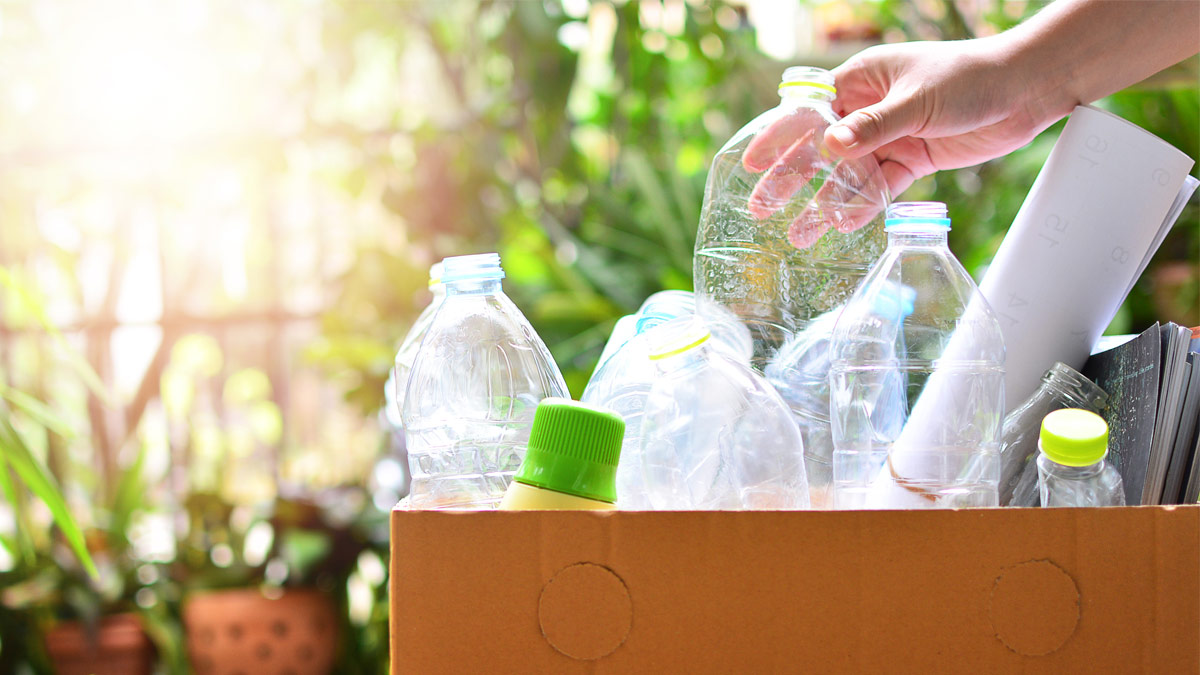
We all want to work toward a greener planet, but not everything can be recycled in the same way. To ensure as many items as possible stay out of the landfill, it is important to pay attention to the small codes stamped onto plastic, glass, and paper products, as they let you know how to recycle the item properly.
If you’ve ever wondered how recycling works, read on for a list of recycling codes and how to navigate them.
Plastic Recycling Codes
According to National Geographic, a shocking 91% of plastic isn’t recycled. One way to help lower that number is by increasing your knowledge around the different ways various plastic types get recycled. Plastics have seven different recycling codes. Usually the higher the number the more difficult it is to recycle.

1. Polyethylene terephthalate (PET/PETE)
PET or PETE, is very common, easy to recycle, and is accepted by most municipal recycling programs. This type of plastic is commonly found in disposable food and drink containers including: water bottles, pop bottles, prepared/frozen food containers.
2. High-density polyethylene (HDPE)
This type of plastic is non-transparent. It is also widely accepted in municipal recycling programs. HDPE is found in household cleaner bottles, shampoo bottles, yogurt containers, and more.
3. Polyvinyl chloride (PVC)
PVC is more difficult to recycle than the first two plastics mentioned above. Want to know why? Unfortunately, PVC is known to contain phthalates, a suspected carcinogen. This type of plastic can be found within children’s toys and a variety of bottles including detergent and shampoo.
4. Low-density polyethylene (LDPE)
This type of plastic is soft and flexible, and can commonly be found in thin plastic bags. Slowly but surely, this type of plastic is being added as an acceptable item to recycle. However, please check to make sure it’s accepted in your area. One way to work around this is to use reusable fabric bags instead of the plastic version.
5. Polypropylene (PP)
This type of plastic can be found in straws, soft-drink cups, and other food containers like utensils. PP Plastic can be recycled, but to be safe please check to make sure it’s accepted locally.
6. Polystyrene (PS)
This type of plastic is also known as styrofoam, which is commonly used in takeout containers and disposable cups. Unfortunately, PS contains styrene which is a known carcinogen. It is not commonly accepted within recycling programs.
7. Other
Includes plastics not included in the previous six categories, including BPA, polycarbonate and bio-based plastics.
Glass Recycling Codes
Most glass food and beverage containers can be recycled, just be sure to rinse them out first! However, other kinds of glass, like windows, ovenware, Pyrex, and crystal are manufactured through a different process and cannot be recycled. There are three types of glass recycling codes:
- Mixed Glass (GL-70)
- Clear Glass (GL-71)
- Green Glass (GL-72)
Paper Recycling Codes
Most paper products can be recycled. However, dirty or greasy paper, along with laminated paper, cannot be recycled. There are three types of paper recycling codes:
- Cardboard (PAP-20)
- Mixed Paper (PAP-21)
- Plain Paper (PAP-22)
To keep this information top of mind, print out our handy one page Recycling Codes Guide! Put it up in your kitchen or near your recycling bins for easy reference (or snap a photo of it if you want to be extra green!).
Frequently asked questions
1-800-GOT-JUNK? is more affordable than you may think. Our junk removal prices are all-inclusive, which means you get:
- Professional, uniformed and insured crew members
- Junk removal from anywhere on the premises
- Loading, lifting and sorting
- Recycling, donating and disposing of items
- Transfer station tariffs and fees
- Gas and travel
We charge by the amount of space your items take up in the truck. We think it’s more fair to you to price by volume instead of the length of time it takes us to lift and load. The best part is we’re cheaper in bulk: the more stuff you have, the more value you get!
For materials with a heavy cubic weight, like dirt, concrete, and gravel, pricing is based on the total volume the material takes up in the truck, up to a maximum of one foot in height for a full truck.
Email us at business@1800gotjunk.com or call us at 1-888-475-3461
If you need service on a weekly, monthly, or quarterly basis, we offer bulk pricing discounts. This gives you better value compared to common alternatives, such as dumpsters or less-professional junk removal services.
Interested? Call our business account team at 1-866-916-5865 to discuss your needs as well as pricing options.
On the day of your appointment with us, our friendly, uniformed truck team members will give you a call 15-30 minutes before the start of your two-hour promise window. They’ll say hi, let you know what time they plan to arrive, and confirm any other details about your appointment if needed.
Whether your business has a single location or multiple locations, we can create a custom junk removal solution that works for you. We can coordinate pickups at multiple locations at a local, regional, and national level. Rather than work with dozens of regional or local companies, let 1-800-GOT-JUNK? handle the jobs across all your locations.
Absolutely! We take large items all the time. As long as it can be lifted and loaded into the truck by two people, we'll be happy to take it away for you!
We work with all types of businesses and can handle any type of job - cleanouts, bulk item removal, general junk removal and even specific items like cardboard or pallets. We can take pretty much anything as long as it's not toxic or hazardous. We can remove your items from wherever they’re located, whether it’s your office, store, site or anywhere else—all you have to do is point!
Yes, we're fully licensed, bonded and insured! We have insurance covering damages to both persons and property for every single booking.
While we don't quite service the entire map, we cover almost every greater metropolitan area across the US, Canada, and Australia. To see if we’re in your neighbourhood, you can start a booking by entering your postal code.
Our customer service center is open 24/7, so we’re here whenever you need us! While operating hours may vary in our franchise locations, we offer same-day and off-hours service, including weekends.