


Hack The Entrepreneur Podcast (2018): How to make things better with Brian Scudamore



TL;DR
On this podcast episode of Hack The Entrepreneur from 2018, Brian Scudamore joins host Jon Nastor to discuss how dropping out of high school and college led to purchasing a single $700 junk truck in 1989, eventually growing 1-800-GOT-JUNK? into a global leader in professional junk removal.
- The Painted Picture mentality: Brian had a vision for becoming the world’s largest junk removal company, and rallied employees and Franchise Partners around this view of the future.
- “Entrypreneurship” model of franchising: When you create an entry point into the world of entrepreneurship through franchising, we can build something bigger and better together.
- Willing To Fail (WTF): 1-800-GOT-JUNK? encourages a culture of trying new things to turn junk removal into an exceptional experience that makes space for new possibilities in people's lives.
Originally aired March 19, 2018.
Published by: Hack The Entrepreneur
Host: Jon Nastor
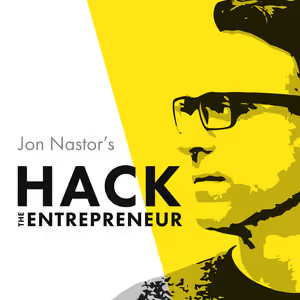
Guest: Brian Scudamore, Founder and CEO of 1-800-GOT-JUNK?.
At 1-800-GOT-JUNK?, we believe that when the junk is gone, something new can begin. Whether we’re helping someone reclaim their garage, make space for a new couch, or clean up after a renovation, our goal is to help people see what’s possible once they clear the clutter from their lives.
However, it took years for founder and CEO Brian Scudamore to reach that point in the business. In this 2018 interview on Hack The Entrepreneur with Jon Nastor, Brian outlines how he made the junk removal industry better than ever before.
Key strategies discussed
- The Painted Picture framework: Crafting a clear document detailing where the company will be in five years. Specifically, focusing entirely on where the brand is going rather than how to get there, in order to align team members around a shared future.
- Entrypreneurship and the abundance mindset: Transforming traditional franchising into "entrypreneurship" gives aspiring business owners a supportive platform to build a company together.
- Playing to strengths and delegating weaknesses: Identifying personal strengths and weaknesses early on (such as detailed financial knowledge or candidate interviewing) lets leaders focus on vision and culture while empowering talented teams to manage the day-to-day details.
- Cultivating a "Willing to Fail" (WTF) culture: Encouraging teams to push past their comfort zones, take smart risks, and embrace mistakes creates an environment where learning and personal growth thrive.
Transcript: How to make things better with Brian Scudamore
Background and entrepreneurial origins
00:00:46:19 - 00:00:59:11
Jon Nastor
Welcome to Hack the Entrepreneur, the show which reveals the fears, habits, and inner battles behind big-name entrepreneurs and those on their way to joining them. Now, here is your host, Jon Nastor.
00:00:59:12 - 00:01:21:28
Jon Nastor
Hey, hey, this is Hack the Entrepreneur. Thank you so much for joining me today. I'm your host, Jon Nastor, but you can call me Johnny. Nothing about today's guest is ordinary. He dropped out of high school. Then he talked his way into college, only to drop out again. Finally, he decided to take his last $700 and start 1-800-GOT-JUNK?.
00:01:21:29 - 00:01:51:20
Jon Nastor
Having built this company into a multi-million dollar home services empire, he is now passionate about empowering other small business owners to take the lead in their own companies. He's the founder of O2E Brands, the banner company for 1-800-GOT-JUNK?, WOW 1 DAY PAINTING, You Move Me, and Shack Shine. They are leaders in customer service, innovation, and franchise development with a combined revenue of $215 million. Now let's hack Brian Scudamore.
00:02:58:07 - 00:03:05:14
Jon Nastor
We are back with another episode of Hack the Entrepreneur, and today we have a very special guest. Brian, welcome to the show.
00:03:05:16 - 00:03:06:26
Brian Scudamore
Thanks for having me, Jon.
00:03:06:27 - 00:03:09:11
Jon Nastor
Absolutely. My pleasure. This is going to be a blast.
00:03:09:12 - 00:03:10:00
Brian Scudamore
Looking forward to it.
The power of a painted picture
00:03:10:00 - 00:03:23:03
Jon Nastor
Nice. Let's jump into it. Brian, as an entrepreneur, can you tell me what is the one thing that you do that you feel has been the biggest contributor to your successes so far?
00:03:23:08 - 00:03:46:22
Brian Scudamore
The one thing? Wow, that's a tough one. I think it really is a whole bunch of little things that add up to one thing. But if I had to pick one thing, I'd say it's my ability to put in writing a vision, or what I call a painted picture, of the future. I will crystal ball, I will dream, I will think about what the future could look and feel like, and how we would act.
00:03:46:25 - 00:04:09:00
Brian Scudamore
I'll put it in writing, one page double-sided, and I share it with everyone in a specific brand of ours. Whether it's WOW 1 DAY PAINTING or 1-800-GOT-JUNK?, we share the painted picture of what that brand's future looks like. Not how we get there, but where we're going. If the team sees it and believes it, it's the most powerful thing I've ever experienced.
00:04:09:01 - 00:04:15:17
Jon Nastor
Wow, I love it. You've been at this game a long time now. When did you adopt this practice?
00:04:15:18 - 00:04:47:16
Brian Scudamore
I've been in this business world or entrepreneurship experience for 27 years. More than half my life. I love every day of it, even the hard days, because you learn, you grow, and you get better. But this whole painted picture happened when I was eight years into my business, in 1997. I was at $1 million in revenue, and I believed that there were a lot of smarter, more talented entrepreneurs around me who were having greater success with sexier businesses.
00:04:47:18 - 00:05:06:16
Brian Scudamore
They had the money, the education, all the ingredients you needed. I found myself in a bit of a doom loop, a little bit of a depression, wondering if I could even build a business bigger than a million. So I said, what if I get rid of the negativity and I just dream and think of pure possibility?
00:05:06:17 - 00:05:28:15
Brian Scudamore
What could 1-800-GOT-JUNK? become? Top 30 metros in North America, featured on The Oprah Winfrey Show. We'd be the FedEx of junk removal with clean, shiny trucks and friendly, uniformed drivers. I put this all in writing, and I was very clear about my language. Not that we would hope to be or want to see those things happen, but that they would happen.
00:05:28:15 - 00:05:47:10
Brian Scudamore
We would be in the top 30 metros in North America. When I put it in writing and started to share it with everybody around me, it seemed that the picture that I locked onto, other people were able to see. It divided my company into two. One camp of people said, yes, I see it, I want to be a part of it.
00:05:47:11 - 00:06:04:14
Brian Scudamore
Let's make it happen. The other group said, you know, this isn't for me, and they left. By the end of 2003, that painted picture did happen and became a reality because we had people believing in where we were going. We didn't know how to get there, but we all worked together as a team to make it a reality.
00:06:04:15 - 00:06:10:08
Jon Nastor
I love it. Just the idea of not even keeping everyone, just keeping the ones who are aligned with your vision.
00:06:10:11 - 00:06:25:11
Brian Scudamore
They kept themselves. Anyone that didn't believe and didn't buy in said this wasn't for them. They slowly worked themselves out of a job and got on a different track, working on a vision that they might have believed in. It works out for everybody.
00:06:25:16 - 00:06:36:27
Jon Nastor
Yeah. To clarify, you didn't know how you were going to get into all of these cities. You didn't know how you were going to get to these revenue marks. That's not what the two pages are about, right?
00:06:36:28 - 00:06:53:12
Brian Scudamore
I didn't have the faintest clue. What I did know is I believed in that picture. I believed in the possibility of where we could go. It would be like someone going, hey, I'm going to go on a trip to Iceland. I don't know how I'm going to get there, I don't know exactly when, but we're going to figure it out.
00:06:53:12 - 00:07:15:16
Brian Scudamore
They put the details in place to make it happen, how they raise the money, whatever they need to do to make that trip to Iceland a possibility. This was a destination with full color. We knew what that picture looked like, but didn't know how to get there, and that was going to be up to the team to figure out. Looking back, that was the most challenging yet exciting part, was the team saying, this is where we're going.
00:07:15:17 - 00:07:19:18
Brian Scudamore
We're all aligned with the direction. Now let's figure out how to get there.
00:07:19:20 - 00:07:25:27
Jon Nastor
I love it. And in 1997, you were nine or ten years already into business, right, at this point?
00:07:25:28 - 00:07:45:20
Brian Scudamore
Yeah, I was eight years into business, a million in revenue. The future was not so bright because of me, the leader who was starting to question. Not that I didn't have a viable business, but whether or not I had a business that could really explode into something much bigger than just a $1 million business.
Redefining franchising through “entrypreneurship”
00:07:45:27 - 00:08:11:00
Jon Nastor
Right. Okay. Let's go back even further if we can, because oftentimes going through it, it's not clear. That's how life and business is. But looking back, there are usually these points in time in every entrepreneur's life when they realize one of two things: either they had this vision to make this huge difference in the world, or, as mostly seems to be the case, they found that they were just sort of unemployable and couldn't work for somebody else anymore.
00:08:11:07 - 00:08:18:23
Jon Nastor
So, Brian, I'd love if you could tell me which side of the fence you see yourself on, and then if you could take us back to when that happened in your life.
00:08:18:28 - 00:08:38:25
Brian Scudamore
I wouldn't say I wasn't employable, but I definitely got fired from every job I ever had. My grandmother fired me from working in our army surplus store because I always wanted this freedom. I wanted to do things my own way. I had my own unique ideas, and I didn't fit the mold of a regular job or even school.
00:08:38:25 - 00:08:57:17
Brian Scudamore
I went to 14 schools, if you include kindergarten all the way to college, and the only one I got a diploma from was kindergarten. I'm a typical entrepreneur, if there is such a thing, in that I don't like to be told what to do and didn't like trying to fit into a mold as a kid growing up.
00:08:57:17 - 00:09:18:19
Brian Scudamore
So I was employable. I did well at some jobs, but they always ended up in me getting fired just because I was done, I had enough, or I challenged the status quo. I found myself as an entrepreneur who thought, okay, if I could come up with these big, hairy, audacious goals, big dreams and goals, the challenge became okay.
00:09:18:19 - 00:09:30:22
Brian Scudamore
Proving to the world, and not really the world, but more myself and probably my parents, that I could do this. With hard work, great focus, and discipline, I was able to make these things happen.
00:09:30:24 - 00:09:50:27
Jon Nastor
Even through the 90s, and not even until recently, I find this word entrepreneur and entrepreneurship in general seems to be very new and very well accepted. Now, to the point where so many people that I talk to, so many people that I know, never really considered themselves an entrepreneur. You just did things, right?
00:09:50:29 - 00:09:56:09
Jon Nastor
You created stuff. But Brian, could you define entrepreneurship to me?
00:09:56:10 - 00:10:20:28
Brian Scudamore
Yeah, entrepreneurship. It comes from the French word entreprendre, which is undertaking. You are undertaking something. You're taking risks. You're taking on this workload and this energy to try and make big things happen. My undertaking has always been coming up with a possibility that nobody believes in, that I can rally people together and say, let's make things happen.
00:10:20:28 - 00:10:43:28
Brian Scudamore
So an entrepreneur is a leader of sorts. I believe that many people want to start businesses but don't have the courage to go out and do it completely on their own. If I look at our family of O2E Brands and all the different people we've got on board, what we did is we developed a new concept. What used to be called franchising, we call “entrypreneurship”.
00:10:44:01 - 00:11:18:03
Brian Scudamore
What that means is finding someone who we can help find an entry point into the world of entrepreneurship through a platform, if you will, at O2E Brands, where someone can build something with us together much better than they could alone. Then when they are successful (say Paul Guy in Toronto, who has built a $7 million or $8 million junk removal business), he is able to pay it forward and find other “entrypreneurs” who he can build businesses with, in other locations and other brands of ours.
00:11:18:03 - 00:11:37:06
Brian Scudamore
This “entrypreneurship” model is a flywheel that continues to build great momentum. The more people we bring into the world of entrepreneurship, the more they will help bring in others. It becomes this generator of small business, and it's working phenomenally well for us.
00:11:37:07 - 00:11:56:29
Jon Nastor
I love it. It almost goes back to your vision of painting that picture. It seems like a mindset you have that isn't one of scarcity in entrepreneurship, where you can basically give all your secrets to people to get them started in business and not worry that they will just take it all and run with it.
00:11:56:29 - 00:12:08:20
Jon Nastor
It seems like you want to help and empower people to grow as entrepreneurs themselves, which in turn obviously helps your company as well.
00:12:08:27 - 00:12:29:04
Brian Scudamore
It's an abundance model of so many great people who have so many great ideas to share that can help us all build better businesses. The more people we bring in, the greater the opportunities for everyone. People often ask, why do we have four brands? Why do we have a goal of building ten brands?
00:12:29:04 - 00:12:44:06
Brian Scudamore
It's more of a great thing. It isn't more money, it isn't more greed. It's more about how we bring in talented people who are meant to build a business, and have the power behind us of all building these great businesses together.
Playing to your strengths and delegating the rest
00:12:44:08 - 00:13:05:10
Jon Nastor
I love it. So your one thing is that ability to paint a picture. You obviously have this abundance mindset, and you are also a brilliant leader. Now, every business expert talks about the 80/20 rule, right? You're supposed to do 20% of the work and get 80% of the results. You're supposed to do what you're good at and delegate the rest.
00:13:05:11 - 00:13:09:26
Jon Nastor
Right? Brian, can you tell me something that you are absolutely not good at in your business?
00:13:09:29 - 00:13:37:00
Brian Scudamore
Most things. I think I've learned, Marcus Buckingham always says, “Play to your strengths, don't try and improve your weaknesses”. What I've done well, I believe, is identifying my weaknesses, and there's an awful lot of them. I identify them, I accept them. I'm not great at hiring. I'm great at attracting people to an idea and having other people go through the rigorous process of recruiting.
00:13:37:00 - 00:13:58:18
Brian Scudamore
But when I sit down and interview someone, I fall in love with their passion and their energy. I don't really get to their skill set, and I'm just not the best interviewer. I’m too ADD to sit down through too many interviews. But, I think I'm able to draw people into an idea and have that idea grow, but I have other people do the recruiting.
00:13:58:20 - 00:14:21:16
Brian Scudamore
I'm not great at details. I'm a very detailed, well organized person, but I know that the financials, the rigor, and the discipline that you need in a business: there are other people who love that stuff. I've been able to take my weaknesses and say, I'm not going to try and improve them. I love the person I am, the leadership that I am about, and the values we have as a company.
00:14:21:16 - 00:14:44:19
Brian Scudamore
I stick to those and I stick to the things I do well, which is very few things: culture, vision, and possibility. We've got teams of people as we've grown to do those other things. Now, the first eight years of my business career, before I developed a painted picture, yes, I was doing absolutely everything from accounts receivable, accounts payable, all the recruiting, you name it, the junk removal.
00:14:44:19 - 00:14:56:12
Brian Scudamore
Over time, I've been able to realize the more I can let go of, the more I can put into the hands of other smarter, more capable people. The better for the business, the better for myself.
00:14:56:14 - 00:15:12:03
Jon Nastor
Do you think you realized this too late about yourself early on, where you didn't play up to your weaknesses like you do now with a massive infrastructure of resources around you to take care of lots of things?
00:15:12:03 - 00:15:31:06
Brian Scudamore
I think we always wish that we could do the learning and the heavy lifting sooner, but it happened when it needed to happen. I needed to make a bunch of mistakes and fall flat on my face before I could have that learning and realize I can't do it all and I need to let go. I learned it when I did, and I'm still learning.
00:15:31:07 - 00:15:56:05
Brian Scudamore
That's the great thing about being an entrepreneur. There's not one entrepreneur out there in the world that I look at and say, I want to be exactly that person. There's no one I model after. I've got tons of mentors, but we all have such a unique way of doing things. I think the beauty is you do what you do the best you can, and you continue to learn from the mistakes that you make and be willing to make mistakes.
Building a culture that is willing to fail
00:15:56:05 - 00:16:09:00
Brian Scudamore
We have a culture at O2E Brands that we call WTF, which actually stands for Willing to Fail. We want people to have a willingness to fail, to make mistakes, to learn and grow. That's what makes us better.
00:16:09:03 - 00:16:24:02
Jon Nastor
Nice. Pushing people to go beyond what their skill set is or what their comfort level is right now, once you're pushed out of that, you can only do that if you're willing to be wrong and make mistakes, right?
00:16:24:04 - 00:16:45:23
Brian Scudamore
Absolutely. We want people that don't play it so safe that they're never willing to fail. We want people to push themselves, be willing to fall down, make a mistake, and admit the mistake, but then say, hey, this is what I learned. It's a great statement when I hear people say, this is what I learned from this, and here's what I won't do next time around.
00:16:45:25 - 00:17:14:07
Jon Nastor
Excellent, excellent. All right, Brian, let's move to projects if we can. We can even take this into a full-on new business if you want, because you mentioned you have four really excellent businesses and brands running under O2E Brands, but you have a goal of ten. I would love to know what your process is, whether it's a written process or just an internal process between you and a team around you.
00:17:14:07 - 00:17:23:04
Jon Nastor
What is the process that you go through when you decide what the next venture is that you guys should put your time, energy, and resources into?
00:17:23:05 - 00:17:46:06
Brian Scudamore
There are quantifiable things, and then there are things that you really can't measure. One of the things I look for is, does it feel right? Is the timing right for us to expand? Do we have too much on our plate, or can we actually afford to start a fifth brand? Does the brand have a name and a feel about it that we adore, that we know customers will fall in love with?
00:17:46:08 - 00:18:09:15
Brian Scudamore
There are more measurable things, like does it have at least $100 million potential? Does it have a seasonality to that model? Does it work in all markets, or are there some places where you go, hey, this is a warm-weather business or a cold-weather business? Snow plowing, for example, doesn't really thrill us because there are few markets where that business would work over a very short season.
Making ordinary home services exceptional
00:18:09:18 - 00:18:35:28
Brian Scudamore
It has to be something where it's an ordinary business but has exceptional potential. O2E Brands stands for making the ordinary business of X exceptional, from ordinary to exceptional. If we were presented with a business model in a world where that service was already exceptional and we were going to be the number two exceptional business in the space, we wouldn't go after it.
00:18:35:29 - 00:19:00:03
Brian Scudamore
We want to find something like junk removal that was ordinary, fragmented, mom-and-pop, with no professionalism and no upfront pricing, and really revolutionize that space to make it exceptional. We're doing the same in moving. We're doing the same in painting. That's the big evaluation. Is it something that fires us up, that gets us excited, that we can make exceptional, that we can grow to beyond 100 million?
00:19:00:05 - 00:19:14:02
Brian Scudamore
It seems to be at this stage, anyway, that it's probably got to be home-service based. We are big believers in growing where you're planted, and we're in the home service industry with all four brands currently, so it makes sense to stay in that space.
00:19:14:07 - 00:19:32:26
Jon Nastor
Yeah, I was going to say there's a real correlation between that business-to-consumer space, right? When you say you want ten brands under this, do you think there's room for ten more brands with $100 million a year revenue around that market of dealing with homeowners?
00:19:32:27 - 00:19:59:01
Brian Scudamore
Absolutely. The homeowner space, if you think of all the services, is a multi-billion dollar space. We're looking to take a small portion of that, but there are many different places that we could look to. If I think of the moving space, for us to be $100 million in revenue in a $19 billion market just in home moving, that's a huge opportunity for us.
00:19:59:01 - 00:20:13:22
Brian Scudamore
I think that some of our brands have the potential of being half a billion dollars or north of that. It's got to be a minimum $100 million space, and it's got to have that great growth potential. Otherwise, it doesn't interest us.
00:20:13:24 - 00:20:27:11
Jon Nastor
Yeah. And then you have to have the room, right? I guess now the determination is whether to put more effort into growing one of these existing brands or to remove some of those people and open up another shop and try again.
00:20:27:12 - 00:20:28:07
Brian Scudamore
Exactly.
00:20:28:07 - 00:20:33:12
Jon Nastor
So I guess finding out the market, where it is, where the cap is, and how close you are to the top of it.
00:20:33:14 - 00:20:53:08
Brian Scudamore
Yeah, we definitely want to come into spaces where if we're not the number one in the space, we know that we can take that position, and we believe in taking that position by delivering an exceptional customer experience. If I look at the moving space, Two Men and a Truck, they are a $400 million business.
00:20:53:09 - 00:21:06:15
Brian Scudamore
They're seven or eight times our size. However, we will absolutely get to that number one position because we're obsessed with customer experience. It's going to take a lot of years and a lot of hard work and money, but that's the spot we chase.
Reflecting on decades of growth and learning
00:21:06:16 - 00:21:33:16
Jon Nastor
Yeah, I love it. All right, Brian, this has been an absolute blast. I want to wrap up on one final question for you. It's this idea I'm calling the entrepreneurial gap. It's this gap that I think we live in sometimes as entrepreneurs and dreamers, where we're always projecting our successes into the future, right? In one month when you hit that metric, in three months when you hit that metric, in one year when you open up another business and it's successful, that's when you're going to see yourself as successful.
00:21:33:16 - 00:21:51:21
Jon Nastor
Yet right before you hit that metric, you're going to set five or ten loftier ones into the future. It's what we have to do to push forward. From the outside, you've had a massively successful career for us watching you. But I know that inside, we're always walking forward and walking towards the horizon.
00:21:51:23 - 00:22:11:15
Jon Nastor
The further you walk, the further it gets away, right? So we end up in this gap. But I would love it, Brian, if you could stop right now, turn around, and look behind you at the last 27 years in this journey (the highs, the lows, the wins, and the losses) and tell me how you feel about everything you've accomplished up until today.
00:22:11:19 - 00:22:32:19
Brian Scudamore
I feel perfect. I feel like everything I've learned, the ups and the downs, they were all meant to happen. I needed to learn lessons from the mistakes I made. People often ask the question, what's one thing you would change? It may sound a little too oversimplified, but it's a heartfelt statement that I wouldn't change a thing. I needed to fail.
00:22:32:19 - 00:22:51:16
Brian Scudamore
I needed to make mistakes. I needed to be knocked down. There were times when I just about lost my business, several times, but it's those things that help you learn. How do you make things better? How do you care more about your people? How do you stand out more from other companies? Whatever it might be.
00:22:51:16 - 00:23:17:26
Brian Scudamore
At the end of the day, 27 years later, I look back and I love every moment I've had. There were stressful times, but they certainly fueled the good times. Looking forward, I know there will be hard times and there will be lots more learning, but as an entrepreneur, it's a lifelong commitment to learning. You just don't ever give up on learning, because those who are entrepreneurs who think they know it all have reached the end of their journey.
00:23:18:00 - 00:23:31:26
Jon Nastor
Beautiful answer. Beautiful answer. All right, Brian, we've got to talk about your business in passing. Can we now specifically tell the listener where to find out more about this “entrypreneurship” you're talking about, and also where they could track you down online?
00:23:31:27 - 00:23:55:12
Brian Scudamore
Two places seem to be most effective. O2E Brands. That's the letter O, which stands for ordinary, the number two, and E for exceptional. So o2ebrands.com. At the bottom of the page, there's a link to all our social media and my LinkedIn. That would be the second place I'd send people to, LinkedIn. Connect with me if I can help you in any way.
00:23:55:14 - 00:24:08:28
Brian Scudamore
Being an entrepreneur, I think the responsibility is to help others who are on the same journey, and I'm a big fan of that. I appreciate you having me on your podcast. It was a fun half an hour together.
00:24:08:29 - 00:24:15:06
Jon Nastor
Oh, absolutely. Absolutely my pleasure, Brian. Please just keep doing what you're doing because it is awesome and inspiring to watch.
00:24:15:08 - 00:24:18:03
Brian Scudamore
Thank you very much, sir.
00:24:18:06 - 00:24:48:29
Jon Nastor
Wow. That was quite the conversation. Brian is quite the human being, quite the entrepreneur. 27 years at it, and from the (I don't want to say lowliest start because it's not at all) but starting a company and going around collecting your own trash, to then having this vision and taking what most people never see as something big.
00:24:48:29 - 00:25:17:26
Jon Nastor
And I mean, as we talked about, $215 million in revenue under O2E Brands, and it's astonishing. I absolutely love the story. I enjoyed that whole conversation. I hope you enjoyed that as much as I did and got as much from that as I did. And I mean, he's a Canadian. Come on, let's give it up for the Canadian entrepreneurs.
00:25:17:29 - 00:25:43:11
Jon Nastor
My favorite part always, next to being part of those conversations and getting to talk to so many smart people all the time, is getting to go back. Getting to go back through the conversation, getting to go back and see what I missed, or sort of get a second perspective on what I think I heard the first time through.
00:25:43:14 - 00:26:05:25
Jon Nastor
So I went back and I listened, and there was a handful of things that really stood out to me. I went back again, and I listened again. Then I went back one more time and listened. The third time through, there was something so clear that Brian said. There was something that he said that to me...
00:26:05:25 - 00:26:17:18
Jon Nastor
...that was the one thing. It was that one thing that he said. Did you get it? Did you hear it? Let's do it. Let's find the hack.
00:26:17:21 - 00:26:37:28
Brian Scudamore
It may sound a little too oversimplified, but it's a heartfelt statement that I wouldn't change a thing. I needed to fail. I needed to make mistakes. I needed to be knocked down. There were times when I just about lost my business, several times. But it's those things that help you learn. How do you make things better?
00:26:37:28 - 00:26:54:18
Brian Scudamore
How do you care more about your people? How do you stand out more from other companies, whatever it might be. At the end of the day, 27 years later, I look back and I love every moment I've had. There were stressful times, but they certainly fueled the good times.
00:26:54:18 - 00:27:30:20
Jon Nastor
And that's the hack. Brian, Brian, Brian, I love this. This is just a beautifully thought out and really true statement that I so appreciate you saying. I think so many of us need to hear this, because you needed to fail, you needed to make mistakes. You needed to get knocked down, you nearly lost your business.
00:27:30:20 - 00:28:07:12
Jon Nastor
I think that lots of us here, myself included, and you listening, could be in that part right now. Yes, you are now 27 years into it with $215 million of revenue and five really awesome companies. But it wasn't always like that. If you had stopped at that point, if you had stopped when you got knocked down, if you had stopped when you had failed, if you had stopped when you were tired, none of this would exist.
00:28:07:14 - 00:28:35:16
Jon Nastor
All the hundreds and thousands of people whose lives you have helped through your business or through “entrypreneurship”, helping people build and grow businesses: none of that would have happened if you had quit. I wanted to bring this out because I think this is so essential. This is so essential to remember when we are in that position and we want to quit.
00:28:35:18 - 00:29:01:22
Jon Nastor
You can't, because you never know what's just on that other side. There's always going to be something in your way, but just on that other side is where these things happen, where these big things happen. When you get to look back and be like, yeah, damn it, I didn't give up, I didn't quit, I learned from it, and I wanted to figure out how I could get better from it.
00:29:01:24 - 00:29:26:21
Jon Nastor
This is so important. We've all been there. Anyone who's tried to do anything and create something out of nothing, which is the basis of entrepreneurship, has failed, has been knocked down, has been mistaken, has been wrong. Whatever you want to say, it's impossible to avoid. The one thing you can avoid is just giving up on all of it.
00:29:26:23 - 00:29:48:05
Jon Nastor
Don't do that. Brian didn't. I haven't up till now, and I don't plan on doing it. I'm so thankful for Brian for sharing and being able to share his story of that 27-year journey. I cannot wait to see where you go from here. Brian, thank you so very much.
Frequently asked questions
How was 1-800-GOT-JUNK? originally founded?
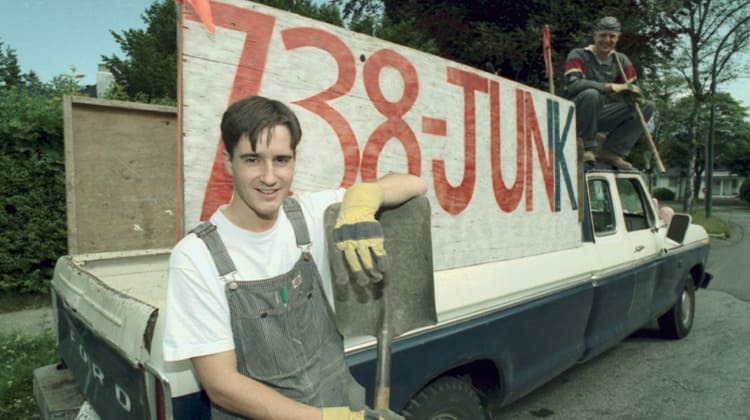
In 1989, 18-year-old Brian Scudamore bought a beat-up pickup truck for $700 after seeing a hauling truck in a McDonald's drive-thru. He initially named the business The Rubbish Boys to pay his way through college before committing to it full-time and growing the company into 1-800-GOT-JUNK?
What is the 1-800-GOT-JUNK? "Painted Picture”?
Written by Founder and CEO Brian Scudamore in 1998, the Painted Picture is a document outlining a clear, detailed five-year destination for the business. It sets ambitious targets to align employees and Franchise Partners around a shared dream.
What does “entrypreneurship” mean?
Another way of thinking about franchising, combining the words “entry” and “entrepreneurship”. It’s all about helping someone enter the world of entrepreneurship through a platform like franchising with 1-800-GOT-JUNK?. We can build something bigger and better together!
Similar articles

Chatter That Matters podcast (2026): Brian Scudamore on the importance of being willing to fail
When Brian Scudamore and Tony Chapman spoke on the Chatter That Matters podcast, they unpacked what it really takes to turn a $700 pickup truck into a $700M global brand. In this article, Brian shares his personal journey of embracing a "WTF" (Willing to Fail) attitude, building a customer-first culture, securing the 1-800-GOT-JUNK? phone number, and making space for possibility.

Advice Line podcast (2024): Brian Scudamore of 1-800-GOT-JUNK? shares his best business advice
In a special episode of NPR’s Advice Line on How I Built This Lab, founder and CEO Brian Scudamore joins host Guy Raz to answer real questions from growing entrepreneurs. From narrowing your focus to telling an authentic founder story, Brian shares the hard-earned lessons that built 1-800-GOT-JUNK? into a global $600 million brand as of 2026.
How I Built This podcast (2017): How Brian Scudamore built 1-800-GOT-JUNK?
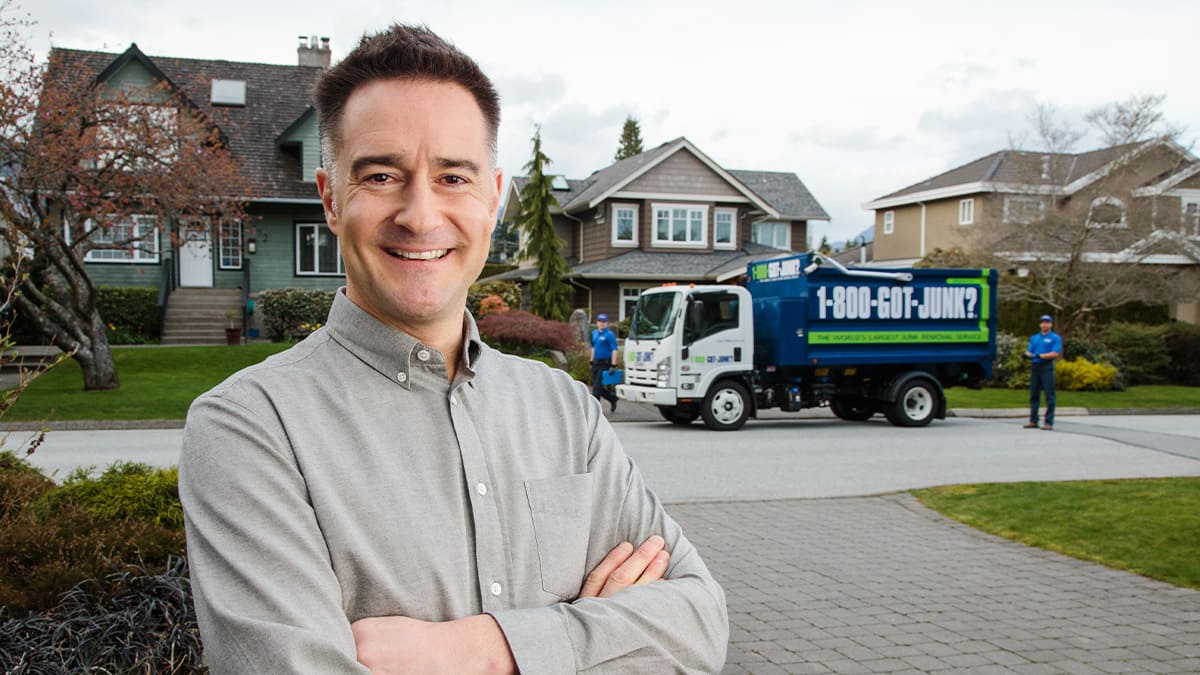
Discover how an 18-year-old high school dropout turned a $700 pickup truck into the world’s largest junk removal service. In this feature based on NPR’s How I Built This podcast, founder Brian Scudamore shares how customer relief, relentless vision, and an iconic phone number built a global brand across Canada, the United States, and Australia.